Seed Stage Marketing

Customer Journey Guide: Mapping Success in 2026

Customer Journey Guide: Mapping Success in 2026

Did you know that by 2026, 80% of customers will expect seamless, personalized experiences at every touchpoint? The customer journey is rapidly changing, making it more important than ever for brands to adapt their strategies.

This guide is designed to help you map the customer journey for long-term success in 2026. Inside, you’ll discover how to understand today’s customers, break down each stage of their experience, and use powerful mapping techniques.

We’ll also explore the latest technology, key best practices, and future trends. Ready to transform your approach? Dive in and elevate your customer experience.

7 Essential Conversion Optimization Tips for Success in 2026

7 Essential Conversion Optimization Tips for Success in 2026

Did you know that businesses embracing conversion optimization in 2026 are outpacing their competitors faster than ever? As digital landscapes evolve rapidly, optimizing your website’s ability to turn visitors into customers is no longer optional. This article is here to give you seven essential conversion optimization tips designed for measurable success. Discover how you can leverage these proven strategies to boost your ROI, stay ahead of industry trends, and build sustainable growth. Ready to future-proof your business? Let’s explore the must-know tactics for winning in the modern marketplace.

AI and SEO Guide: Unlocking Optimization in 2026

AI and SEO Guide: Unlocking Optimization in 2026

AI is fundamentally transforming the digital landscape, and by 2026, the combination of ai and seo will be essential for any brand aiming to lead in online visibility. This guide will show you how artificial intelligence is revolutionizing SEO, what optimization looks like in the future, and practical steps to future-proof your search strategy.

We’ll break down the evolution of AI in SEO, the core pillars of optimization, actionable implementation tactics, must-have tools, and the trends that will shape success in the coming years.

Did you know Gartner predicts traditional search traffic will drop by 25% by 2026 as AI changes how people discover information? Learn how top brands are using AI to automate, personalize, and boost their SEO. Discover the exact steps and tools to stay ahead. Read on for a comprehensive blueprint to unlock SEO optimization in 2026.

Brand Messaging Framework Guide: Strategy for 2026 Success

Brand Messaging Framework Guide: Strategy for 2026 Success

In 2026, a powerful brand messaging framework will make the difference between brands that thrive and those that fade into the background. This guide is your roadmap to mastering a brand messaging framework that wins trust, drives loyalty, and stands out in a crowded market. You’ll discover why frameworks are crucial, what components matter most, how to create your own step by step, and how leading brands succeed with clear messaging. Ready to craft messaging built for tomorrow’s challenges? Start here for a proven approach to clarity, consistency, and growth.

Product Led Growth Guide: Unlocking Success in 2026

Product Led Growth Guide: Unlocking Success in 2026

Understanding Product Led Growth in 2026

What does it mean when a product becomes the center of your growth strategy? As we look at the SaaS landscape in 2026, product led growth is more than a buzzword. It's a revolution that shifts the way companies acquire, engage, and retain users. Let's break down what makes it so powerful, and why it's now the default approach for tech businesses.

7 B2B Email Marketing Best Practices for Success in 2026

7 B2B Email Marketing Best Practices for Success in 2026

The landscape of B2B email marketing is evolving faster than ever in 2025. Marketers face rising competition, stricter data privacy rules, and rapid AI advancements all at once.

Standing out in crowded inboxes requires more than old tactics. Buyers expect value and relevance with every message, and new tools are changing what’s possible.

This article will guide you through the essential B2B email marketing best practices you need to succeed. You’ll learn how to adapt, stay compliant, and drive real business results in today’s challenging climate.

7 Key Challenges Facing Early Stage Startups in 2025

7 Key Challenges Facing Early Stage Startups in 2025

Launching early-stage startups in 2025 means entering a world where opportunity and risk are both at record highs. The pace of change and complexity is unlike anything founders have faced before. Did you know that more than 90% of startups struggle to survive their first few years, with funding trends shifting dramatically each year?

Understanding the unique challenges ahead is crucial for anyone hoping to beat the odds. In this article, we uncover the seven most pressing obstacles that early stage startups will face this year, including funding, talent, competition, regulation, technology, customer acquisition, and operational resilience.

Marketing Growth Engines: Unlocking Scalable Success in 2025

Marketing Growth Engines: Unlocking Scalable Success in 2025

In 2025, the race for business success will demand more than ambition. Companies face digital disruption, rising customer expectations, and economic uncertainty, making it harder than ever to achieve sustainable growth.

To not just survive but thrive, organizations need a proven approach that can deliver repeatable results. The answer is building a growth engine—a structured, data-driven system that top performers use to outpace the competition.

This guide will break down the essential components, strategies, and practical steps you need to build a high-performing growth engine for scalable, measurable success in the year ahead. Discover what a growth engine is, why it matters now, which frameworks drive results, and how you can implement and optimize your own for the future.

Your First 90 Days of Marketing: What Seed-Stage Founders Actually Need to Do

Your First 90 Days of Marketing: What Seed-Stage Founders Actually Need to Do

You’ve closed your seed round, landed your first couple dozen customers, and now the pressure is real. Investors want traction, your team wants direction, and you’re trying to figure out what “marketing” actually looks like at this stage.

Here’s the truth: you don’t need a big marketing team or a fancy brand campaign. You need clarity. The first 90 days aren’t about scaling, they’re about learning. You’re building a repeatable system that helps you find who your best customers are, what they care about, and how to communicate that you’re the one who can solve it.

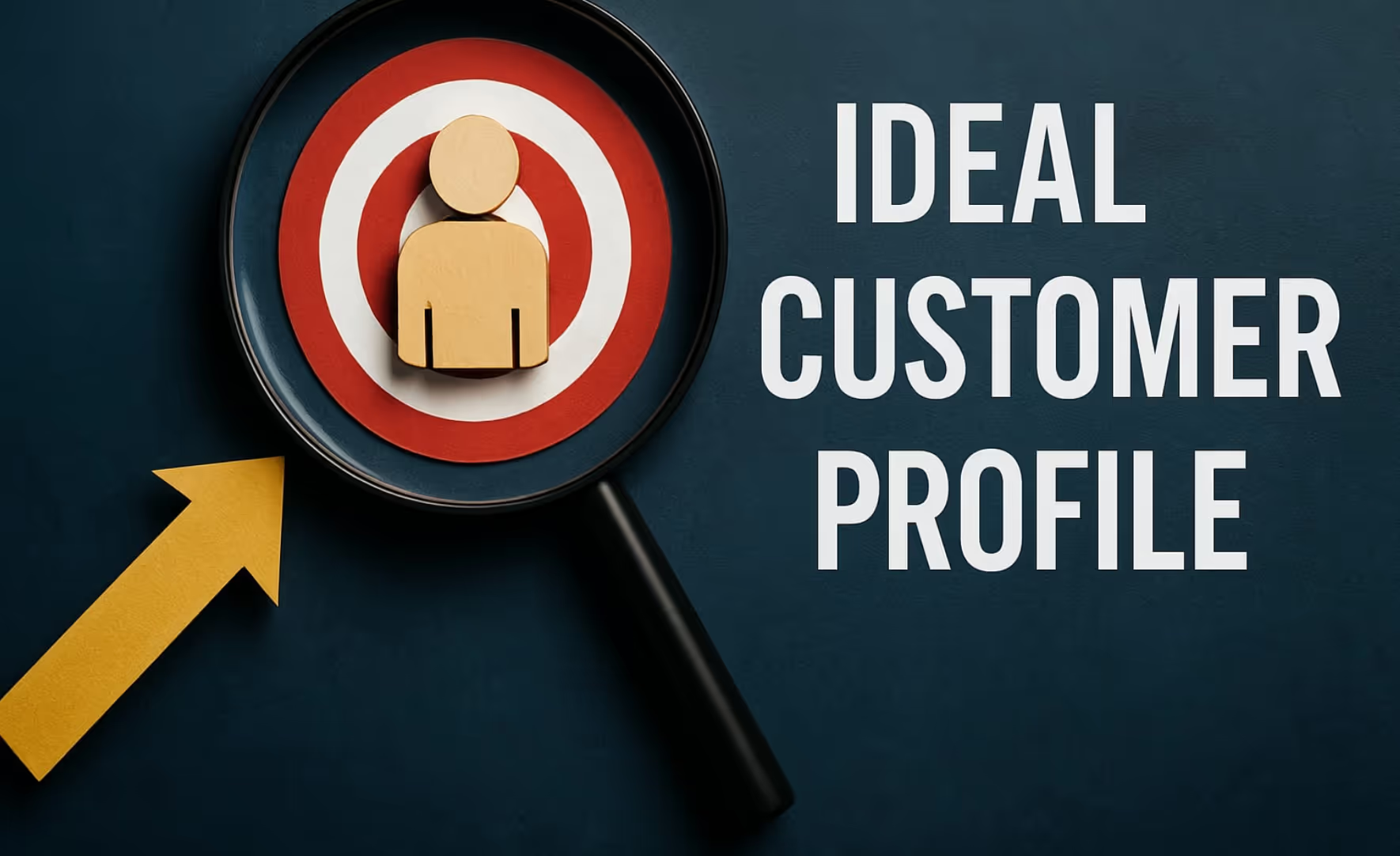
1. Identify Your Ideal Customer Profile (ICP)

Your ICP is not “anyone who could use the product.” It’s the narrow group of people who get the most measurable value from what you’ve already built. Start by analyzing your first 25 customers:

  • Who uses your product most consistently?

  • Who gets results without heavy onboarding or support?

  • Who renews or expands quickly?

Document the patterns: industry, company size, buyer role, problem severity, and urgency. A clear ICP tells you who’s truly worth pursuing and helps you stop chasing anyone who’s not a fit.

2. Define Your ICP’s Core Problems

Every great marketing system starts with one simple truth: customers don’t buy products, they purchase progress.

Dig through your onboarding calls, support messages, and customer interviews. Capture the words your ICP actually uses when describing their pain. Don’t translate or polish, write it verbatim. Then ask:

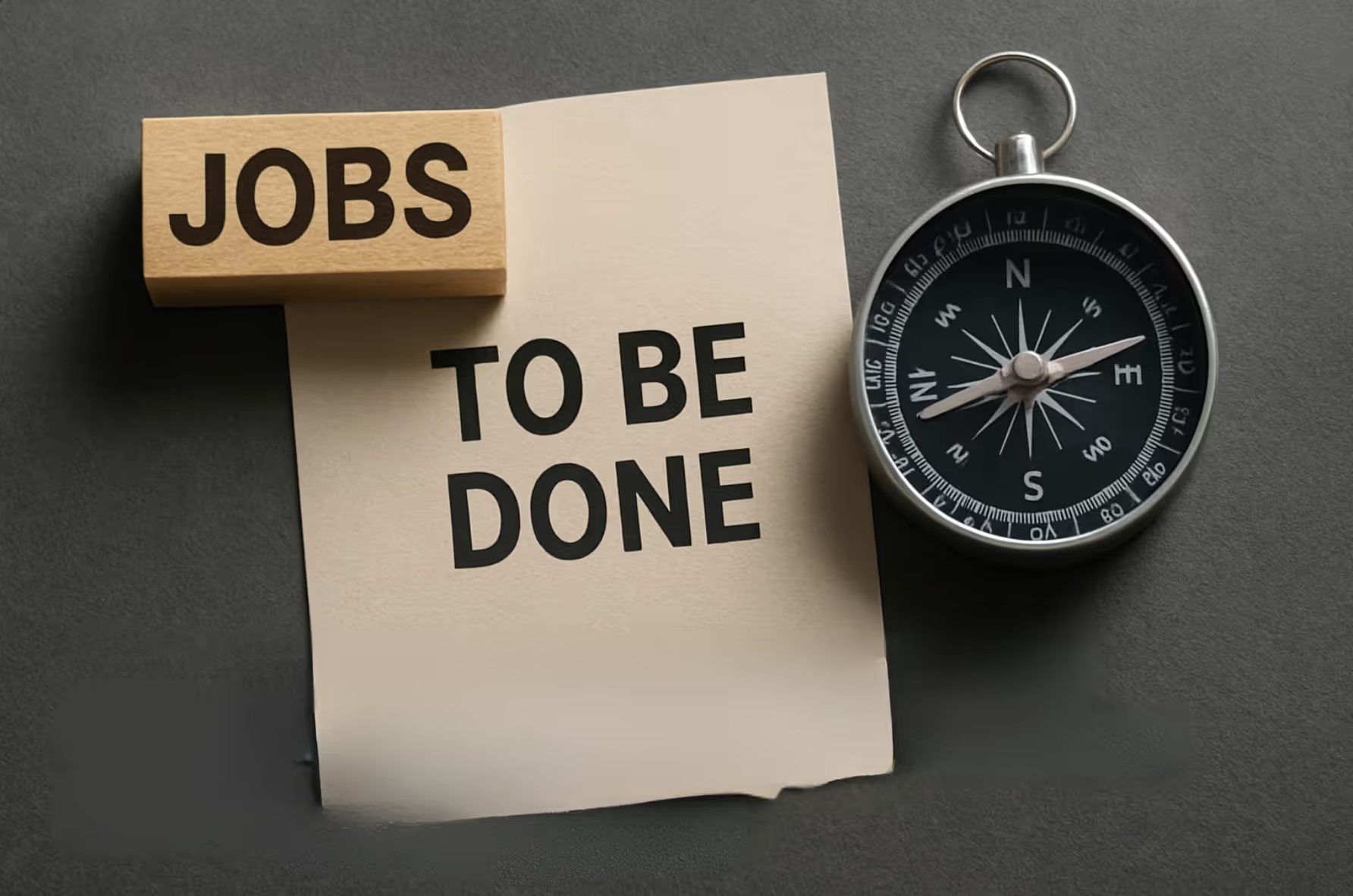
  • What job are they trying to get done?

  • What’s blocking them from doing it now?

  • What happens if the problem isn’t solved?

Once you understand those emotional and practical triggers, your entire marketing motion becomes easier to build around real problems, not assumptions.

3. Find Where Your ICP Already Is

You don’t need to create attention out of thin air. You just need to show up where your prospects already are.

If you’re selling to technical founders or product leaders, that might be:

  • Niche Slack or Discord communities

  • Specialized technical newsletters

  • LinkedIn groups or technical forums

  • Specific subreddits or GitHub discussions

Lurk first, listen, then contribute with genuine insights. The fastest way to lose credibility is to pitch too early. The quickest way to gain it is to add value before you ask for anything.

4. Craft Messaging That Proves You Understand Your ICP

This is where your empathy and positioning meet. Don’t start with your features, start with their frustration.

Instead of “We’re a powerful analytics platform for SaaS,” try:

“You shouldn’t need a data engineer just to see how users move through your app.”

That’s how you show you get it. Once they feel understood, they’ll listen when you explain how you solve it. Build 3–5 variations of your problem statement and test them in your outreach, ads, or landing pages. Watch what makes people nod and say, “Yes, that’s me.”

5. Launch One or Two Channels That Reach Your ICP

You don’t need to be everywhere, you need to be somewhere consistently. Pick one or two channels you can actually manage for 90 days and go deep. A few examples:

  • LinkedIn + Email: great for founder-led storytelling and early thought leadership.

  • Podcast Guesting + Landing Page: build credibility fast and capture inbound leads.

  • Paid Search + Demo Page: useful if there’s existing demand in your category.

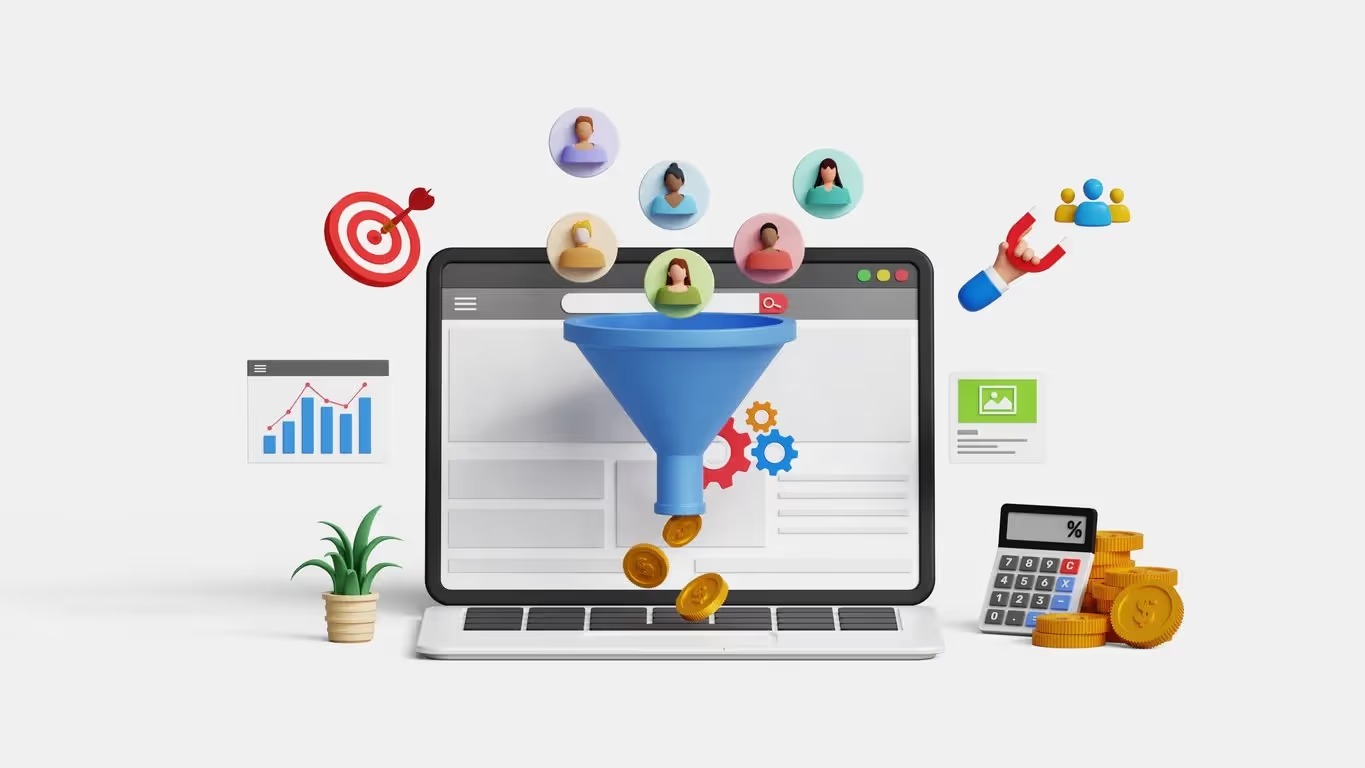
Keep the funnel simple: one offer, one landing page, one nurture sequence. Drive consistent traffic and watch what converts. That single path will teach you more than six half-built channels ever could.

6. Look at the Data and Iterate on Your ICP Messaging

At this stage, data isn’t about dashboards, it’s about direction. Track a handful of meaningful metrics:

  • Qualified leads per week

  • Conversion rate on your landing page

  • Response rate on outbound messages

If results aren’t moving, resist the urge to blame the channel. Go back to your message. Test a new angle. Simplify your CTA. Try another pain point. Every test teaches you something about what resonates — and that learning compounds over time.

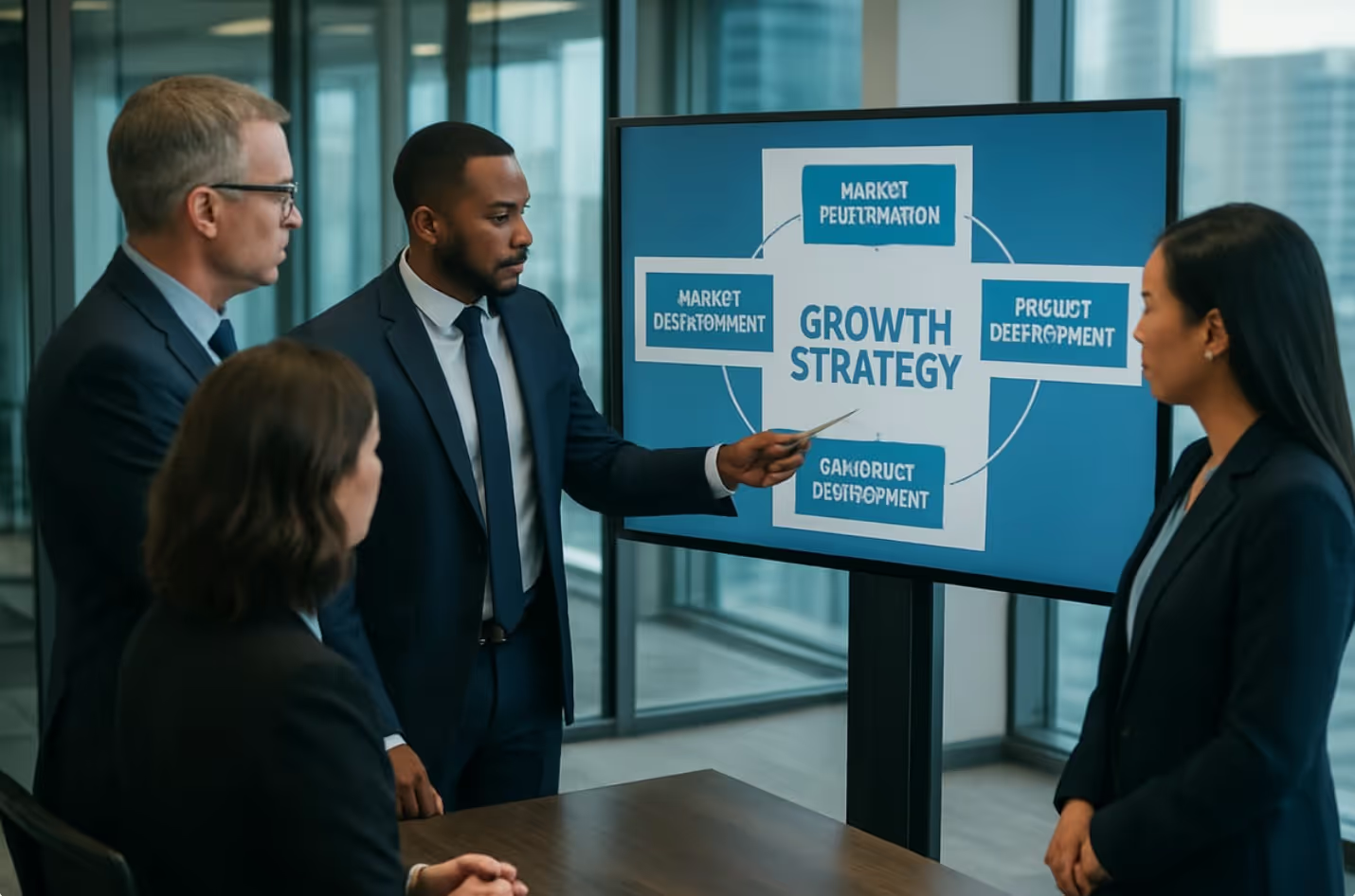
7. Launch Your Growth Engine

Once you start seeing traction with consistent engagement, demo requests, or content shares, it’s time to build the system around it. You’ve proven demand. Now you need a repeatable engine to fuel it:

  • Document what’s working and why.

  • Build processes so freelancers or VAs can execute the repeatable parts.

  • Create a rhythm for testing and measurement every month.

Building a growth engine is tough — but you don’t have to do it alone. At RCKT, we help seed-stage founders turn early traction into predictable systems. From defining ICPs to building your first demand engine, we help you move from “what’s working” to “what scales.”

Because the real goal of your first 90 days isn’t marketing — it’s ICP definition and data.