
The difference between a B2B SaaS company that scales predictably and one that burns cash on scattered marketing efforts often comes down to one critical element: a well-designed market funnel. Early-stage founders frequently fall into the trap of executing random tactics without understanding how prospects move through distinct stages before becoming customers. Building a strategic market funnel transforms chaotic marketing activities into a systematic growth engine that delivers measurable results and sustainable revenue expansion. This structured approach allows you to identify exactly where prospects drop off, which channels drive the highest quality leads, and how to optimize every touchpoint for maximum conversion.
Understanding the Market Funnel Framework
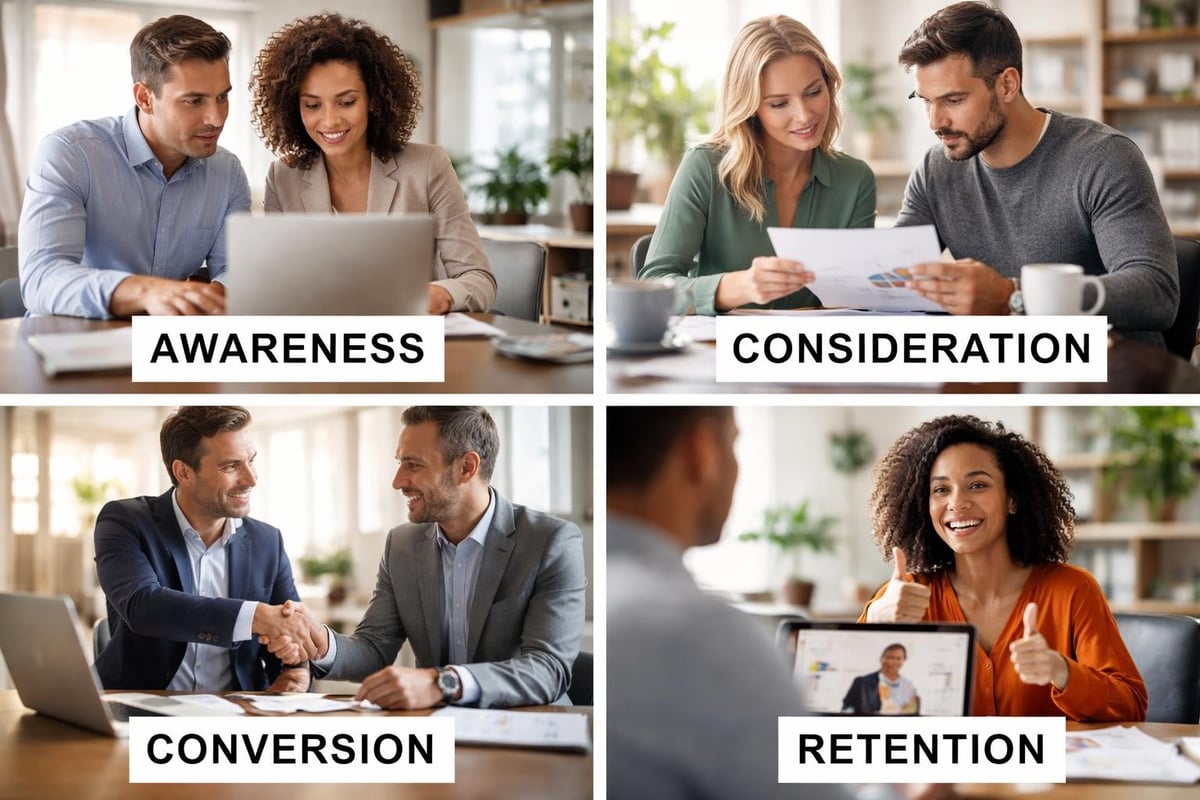
A market funnel represents the complete journey prospects take from first discovering your solution to becoming loyal customers who advocate for your brand. Unlike traditional sales funnels that focus narrowly on closing deals, a comprehensive market funnel encompasses every touchpoint across awareness, consideration, conversion, and retention stages.
The marketing funnel serves as the strategic blueprint that connects your brand messaging, content strategy, and channel execution into a unified system. For B2B SaaS companies, this framework proves especially critical because buying cycles extend longer, involve multiple stakeholders, and require substantial education before prospects commit to a purchase decision.
The Strategic Value of Funnel Thinking
Approaching growth through a market funnel mindset shifts your perspective from individual campaign performance to holistic system optimization. You begin to see how blog content at the awareness stage feeds webinar registrations at the consideration stage, which ultimately drives product demos and closed deals.
This interconnected view reveals opportunities that isolated tactics miss entirely. When you understand that 70% of prospects who attend your educational webinars eventually convert compared to just 15% from cold outreach, you can allocate resources more effectively and build campaigns that compound over time.
Key benefits of market funnel optimization include:
- Predictable revenue forecasting based on conversion rates at each stage
- Efficient budget allocation toward highest-performing channels and content
- Reduced customer acquisition costs through systematic improvements
- Scalable processes that maintain effectiveness as you grow
- Data-driven decision making that replaces gut instinct
Building the Awareness Stage
The top of your market funnel exists to generate attention from your ideal customer profile and establish your brand as a credible solution provider. At this stage, prospects don't yet recognize they have a problem or that solutions like yours exist.
Effective awareness strategies for B2B SaaS companies leverage educational content that addresses pain points before pitching products. This means creating thought leadership articles, research reports, podcasts, and social content that provides genuine value without demanding immediate commitment.
Channel Selection for Maximum Reach
Choosing the right channels for awareness campaigns requires deep understanding of where your target buyers spend time and consume information. For technical audiences, platforms like LinkedIn, industry-specific communities, and developer forums typically outperform consumer-focused channels like Instagram or TikTok.
The mistake many early-stage companies make involves spreading efforts across too many channels simultaneously. A focused approach that dominates two or three strategic channels delivers better results than mediocre presence across ten platforms.
High-performing awareness channels for B2B SaaS:
- Organic search through SEO-optimized blog content and resource pages
- LinkedIn organic posting and thought leadership from founders
- Strategic podcast appearances on shows your buyers actively follow
- Community engagement in Slack groups, Discord servers, and forums
- Targeted paid social campaigns with educational content offers
Your awareness content should address specific searches and questions your prospects have during early problem recognition. When someone searches for solutions to challenges your product solves, your content should appear as the authoritative answer that begins their journey through your market funnel.
Optimizing the Consideration Stage
Once prospects enter the consideration stage of your market funnel, they've acknowledged their problem and begun actively researching potential solutions. Your objective shifts from education to differentiation, demonstrating why your approach solves their challenge better than alternatives.
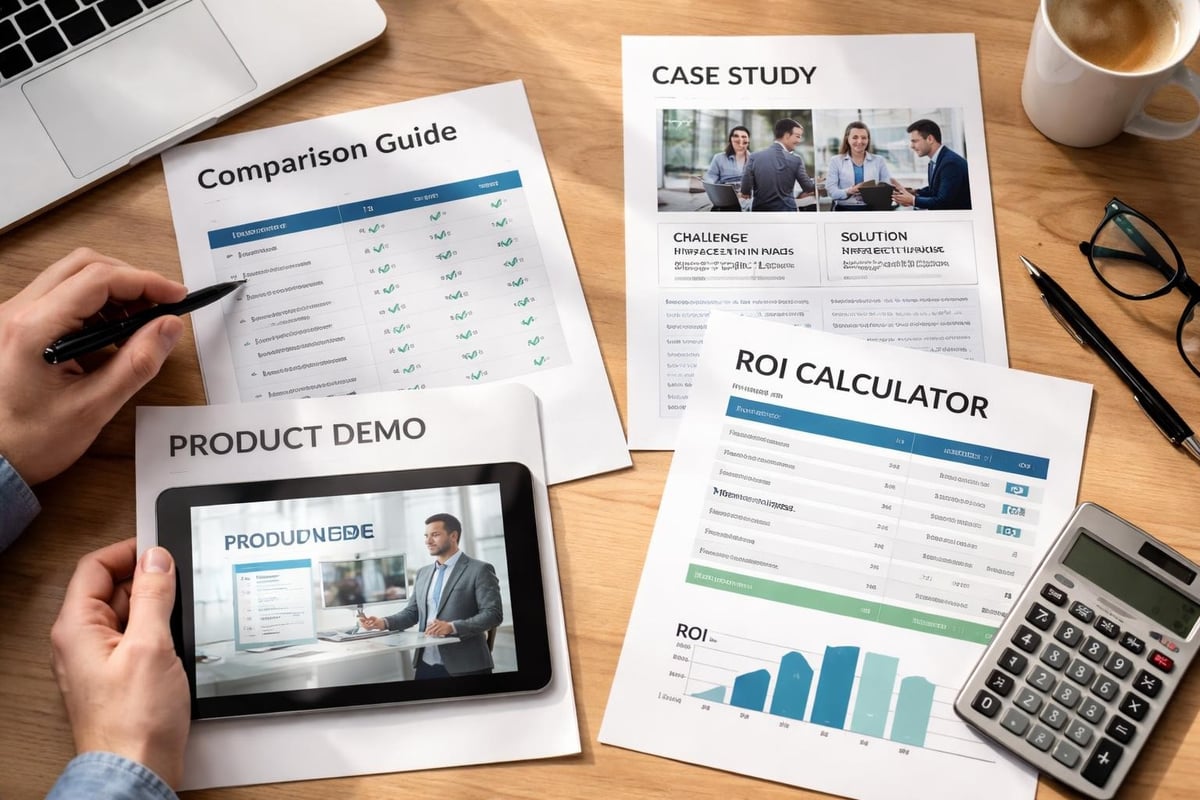
Consideration-stage content takes deeper dives into methodologies, frameworks, and implementation strategies. Webinars, comparison guides, case studies, and detailed product education all serve to move prospects closer to a purchase decision while building trust in your expertise.
Nurture Sequences That Convert
Email nurture campaigns form the backbone of effective consideration-stage marketing. These automated sequences deliver targeted content based on prospect behavior, gradually addressing objections and highlighting relevant use cases that match their specific situation.
The most effective nurture sequences incorporate multiple content formats and provide clear pathways forward. Rather than simply broadcasting promotional messages, strategic nurture campaigns create genuine conversation and invite engagement through surveys, interactive tools, and personalized recommendations.
A well-structured consideration stage tracks engagement signals that indicate buying intent. When prospects download your ROI calculator, attend multiple webinars, or spend significant time on pricing pages, these behaviors signal readiness to advance through your market funnel toward conversion.
Research on funnel optimization demonstrates that companies achieving the highest conversion rates continuously test messaging, content offers, and nurture timing to identify what resonates most effectively with their specific audience segments.
Driving Conversion Through Your Market Funnel
The conversion stage represents the critical moment when consideration transforms into commitment. For B2B SaaS companies, this typically involves product demonstrations, free trials, proof-of-concept projects, or direct sales conversations depending on your product complexity and price point.
Conversion optimization requires removing friction from the buying process while providing sufficient support to address remaining objections. Every additional form field, unclear next step, or unanswered question creates opportunity for prospects to abandon their journey through your market funnel.
Sales and Marketing Alignment
The handoff between marketing and sales represents the most common breakdown point in B2B market funnels. Marketing generates leads that sales teams consider unqualified, while sales complains about insufficient lead volume or quality. This misalignment wastes resources and damages potential revenue growth.
Establishing clear lead scoring criteria, service level agreements, and feedback loops between teams ensures prospects receive appropriate attention at the right time. Marketing-qualified leads (MQLs) should have specific criteria that indicate genuine buying intent, while sales-qualified leads (SQLs) meet additional requirements that signal near-term purchase readiness.
The RCKT Growth Framework addresses these alignment challenges by creating unified definitions, processes, and metrics that both teams share. This systematic approach eliminates the ambiguity that typically causes marketing and sales to work at cross-purposes rather than as integrated components of a single market funnel.
Conversion rate optimization tactics:
- Simplified signup and onboarding flows with minimal required fields
- Live chat support during critical decision moments
- Personalized sales outreach based on specific engagement patterns
- Social proof through customer testimonials and third-party reviews
- Risk reversal through free trials, money-back guarantees, or pilot programs
Your conversion infrastructure should make buying easy while providing enough information and support to overcome natural purchase anxiety. The goal involves reducing the perceived risk of making a wrong decision while increasing confidence in your solution's ability to deliver promised outcomes.
Retention and Expansion Strategies
The bottom of your market funnel focuses on customer retention and revenue expansion through upsells, cross-sells, and advocacy programs. For B2B SaaS businesses operating on subscription models, retention metrics like net revenue retention (NRR) often matter more than new customer acquisition for sustainable growth.
Retention begins the moment a customer signs their contract, not after they've used your product for months. Strategic onboarding sequences, success milestones, and proactive support prevent the early churn that destroys lifetime value and undermines your entire market funnel economics.
Building Expansion Revenue Engines
The most profitable SaaS companies generate significant revenue from existing customers who expand usage over time. This expansion happens through systematic identification of upsell opportunities, strategic account management, and product-led growth mechanics that encourage increased adoption.
Your market funnel shouldn't end at initial conversion. Instead, it should continue through multiple expansion loops that identify when customers achieve success milestones that indicate readiness for additional capabilities, higher-tier plans, or complementary products.
Customer advocacy programs transform satisfied users into active promoters who generate awareness among their networks. These referrals enter your market funnel with higher trust, faster sales cycles, and better retention rates than prospects from cold outreach or paid advertising.
Examining how a YC-backed SaaS startup 3.5x ARR with a full-funnel growth system reveals the compounding impact of retention and expansion strategies working alongside acquisition efforts.
Measuring Market Funnel Performance
Effective market funnel management requires rigorous measurement of conversion rates between each stage, time-to-conversion metrics, and channel attribution that reveals which activities drive the most valuable outcomes. Without accurate data, optimization becomes guesswork rather than strategic decision-making.
The metrics that matter vary by funnel stage. Awareness campaigns should track reach, engagement, and cost per engaged visitor. Consideration stage metrics focus on content consumption, email engagement rates, and progression velocity. Conversion analysis examines close rates, sales cycle length, and customer acquisition cost.
Attribution and Analytics Infrastructure
Modern marketing attribution presents significant challenges because B2B buyers interact with multiple touchpoints across extended timeframes before converting. They might discover you through organic search, engage with LinkedIn content, attend a webinar, read case studies, and then convert weeks or months later through direct navigation.
First-touch attribution credits only the initial discovery channel, while last-touch attribution credits only the final interaction before conversion. Neither approach captures the full reality of how your market funnel operates. Multi-touch attribution models provide more accurate understanding by distributing credit across all meaningful interactions throughout the buyer journey.
Essential market funnel metrics to track:
- Top-of-funnel: Traffic volume, cost per visitor, engagement rate, content consumption
- Mid-funnel: Lead conversion rate, MQL to SQL conversion, nurture engagement, time in stage
- Bottom-funnel: Demo-to-close rate, average contract value, sales cycle length, win rate
- Post-purchase: Activation rate, time-to-value, net revenue retention, customer lifetime value
- Cross-funnel: Overall conversion rate, cost per acquisition, payback period, return on ad spend
Academic research on conversion funnel optimization demonstrates that data-driven approaches significantly outperform intuition-based marketing decisions, particularly when dealing with complex multi-stage customer journeys.

Advanced Market Funnel Optimization Techniques
Once your foundational market funnel operates effectively, advanced optimization techniques unlock incremental performance improvements that compound into substantial competitive advantages. These strategies require sophisticated implementation but deliver outsized returns for companies willing to invest in continuous refinement.
Segmentation represents one of the most powerful optimization levers available. Rather than treating all prospects identically, segmented approaches customize messaging, content, and offers based on industry vertical, company size, use case, or behavioral signals. This personalization increases relevance and improves conversion rates across every funnel stage.
Experimentation and Testing Frameworks
Systematic testing separates high-performing market funnels from mediocre ones. A/B tests on landing pages, email subject lines, call-to-action buttons, and content offers generate data that reveals what resonates with your specific audience rather than relying on best practices from other companies serving different markets.
The key to effective experimentation involves running enough tests to achieve statistical significance while maintaining consistency in your testing methodology. Random, unstructured testing wastes resources and produces misleading results that damage rather than improve performance.
Modern approaches to marketing funnel optimization emphasize continuous improvement through iterative testing cycles that systematically address the biggest conversion bottlenecks first before moving to smaller optimizations.
Advanced optimization strategies:
- Dynamic content that adapts based on firmographic data and behavioral signals
- Predictive lead scoring using machine learning to identify highest-value prospects
- Conversational marketing through chatbots and live chat at critical decision points
- Account-based marketing for high-value targets with personalized campaigns
- Retargeting sequences that re-engage prospects who abandoned the funnel
Market funnel sophistication should match your company's growth stage and available resources. Early-stage companies benefit more from executing fundamentals consistently than from implementing complex attribution models or AI-powered personalization that requires substantial data volume to function effectively.
Common Market Funnel Mistakes to Avoid
Even sophisticated marketing teams fall into predictable traps that undermine market funnel performance. Recognizing these common mistakes helps you avoid wasting resources on approaches that seem logical but fail to deliver results.
The most frequent error involves focusing exclusively on top-of-funnel metrics like traffic and lead volume while ignoring conversion quality and downstream revenue impact. Generating thousands of unqualified leads creates the illusion of progress while actually overwhelming sales teams and damaging efficiency.
Neglecting the Full Funnel
Many B2B SaaS companies over-invest in awareness and conversion while treating consideration and retention as afterthoughts. This creates a leaky market funnel where prospects enter but quickly exit without converting, or customers churn shortly after purchase due to poor onboarding and support.
Balanced investment across all funnel stages produces more sustainable growth than concentrating resources at any single point. Your market funnel operates as an integrated system where weakness at any stage limits overall performance regardless of how well other stages function.
The purchase funnel concept has evolved significantly from its origins, yet many companies still apply outdated linear thinking to what has become a complex, multi-channel customer journey with numerous feedback loops and non-linear pathways.
Avoiding these pitfalls requires honest assessment of where your market funnel currently underperforms and willingness to address root causes rather than symptoms. When conversion rates lag, the problem often exists in earlier stages that failed to properly qualify and educate prospects rather than in the conversion stage itself.
Integrating Your Market Funnel with Growth Strategy
Your market funnel shouldn't exist as an isolated marketing artifact separate from broader business strategy. Instead, it should function as the operational blueprint that connects strategic objectives to tactical execution across your entire go-to-market motion.
Integration means aligning product roadmaps with market funnel insights about which features drive adoption, informing pricing strategy based on conversion data, and structuring your team around funnel stages rather than functional silos. This holistic approach ensures every department contributes to funnel performance rather than optimizing for local metrics that may conflict with overall growth.
The most successful B2B Saaas companies treat their market funnel as a living system that evolves based on customer feedback, market conditions, and competitive dynamics. Regular reviews identify emerging opportunities and threats that require strategic adjustments to messaging, positioning, or channel mix.
Companies that master market funnel integration achieve remarkable efficiency advantages. They waste less budget on ineffective channels, close deals faster through better-qualified pipelines, and retain customers longer through superior onboarding and success programs. These compounding benefits create sustainable competitive moats that are difficult for less disciplined competitors to overcome.
Working with specialists who understand growth framework implementation accelerates the journey from disorganized tactics to systematic growth engines that deliver predictable results.
Building and optimizing a market funnel transforms scattered marketing activities into a strategic growth engine that drives predictable B2B SaaS expansion. The systematic approach outlined here provides the foundation for sustainable revenue growth, but implementation requires expertise, discipline, and continuous refinement. If you're ready to transition from chaotic marketing efforts to a structured system that delivers measurable ROI, RCKT specializes in helping seed and Series A stage B2B SaaS founders build full-funnel demand systems using proven frameworks that have driven triple-digit lead growth and multi-fold ARR expansion for early-stage tech companies.