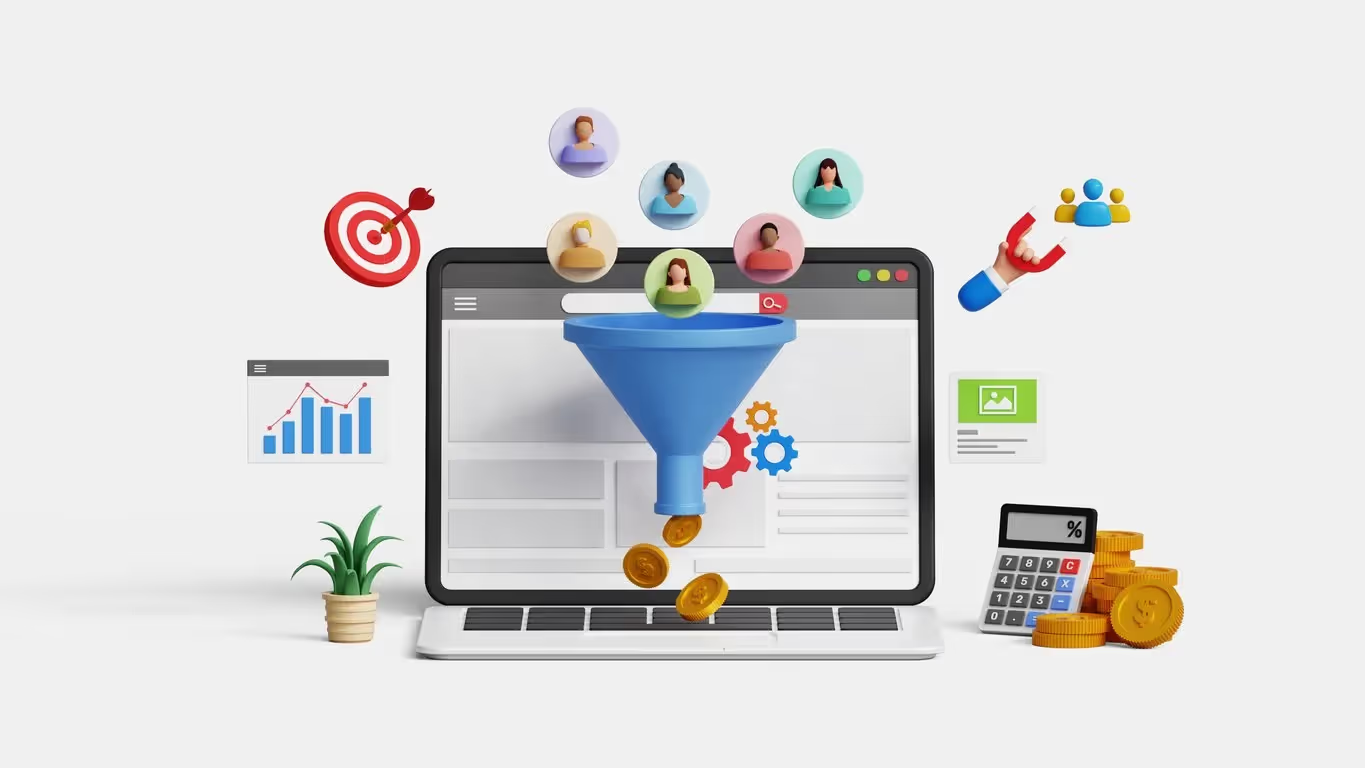
In 2026, understanding each funnel stage is essential for digital marketing success. The journey from first impression to loyal customer is more complex than ever, and mastering each funnel stage is the difference between unpredictable results and scalable growth.
This guide will walk you through every funnel stage, showing you how to attract new leads, nurture relationships, and convert prospects into loyal advocates. We’ll explore proven strategies for Awareness, Interest, Consideration, Conversion, and Loyalty, and reveal the metrics you need to track for each step.
Ready to transform your marketing approach? Discover the latest trends, actionable insights, and a clear blueprint to master every funnel stage and future-proof your strategy for 2026.
The Modern Funnel Explained: Evolution and Importance in 2026
Understanding the marketing funnel stage is more critical than ever in 2026. As customer journeys become increasingly nonlinear, brands must engage prospects across multiple touchpoints to stay competitive. The funnel stage is not just a marketing buzzword—it structures how businesses guide potential customers from first contact to loyal advocacy, shaping every interaction along the way.
Over the past decade, the classic AIDA (Attention, Interest, Desire, Action) framework has evolved into a more nuanced, multi-stage model. Today, the funnel stage includes Top of Funnel (TOFU) for Awareness, Middle of Funnel (MOFU) for Interest and Consideration, Bottom of Funnel (BOFU) for Conversion, and an essential Loyalty or Advocacy stage. This shift reflects the reality that buyers often loop between stages, consuming content, comparing options, and engaging with brands across various platforms.
A key distinction exists between marketing, sales, and conversion funnels. While all share the same general path, each funnel stage serves a unique purpose. The marketing funnel focuses on attracting and nurturing leads, the sales funnel zeroes in on qualification and closing deals, and the conversion funnel emphasizes optimizing the path to purchase. However, these funnels overlap—especially as modern buyers expect seamless transitions between marketing and sales functions.
For SaaS and B2B brands, adopting a full-funnel approach has become non-negotiable. According to recent studies, companies leveraging an integrated funnel stage strategy see up to 73% higher conversion rates and significantly lower customer acquisition costs. In eCommerce, brands orchestrate multi-stage funnels that start with social discovery, move through personalized retargeting, and culminate in streamlined checkout experiences. Service industries use detailed nurturing sequences to build trust before a prospect ever speaks to sales.
The rise of digital transformation and AI has increased both the complexity and potential of each funnel stage. Personalization is now powered by real-time data and machine learning, allowing brands to deliver tailored experiences at scale. However, this sophistication comes with challenges: recent reports show the average cost per acquisition (CPA) has risen by over 20% year-over-year, while conversion rates have plateaued or declined for brands not optimizing every funnel stage.
For a deeper dive into how each funnel stage works and why a modern, multi-stage approach is essential, check out the Growth Funnel Stages Explained guide. By mastering the modern funnel, marketers in 2026 can unlock predictable growth, higher ROI, and long-term customer loyalty.
Step 1: Awareness—Capturing Attention at the Top of the Funnel
The awareness funnel stage is where your brand first steps into the spotlight. In 2026, this means more than just being seen—it’s about capturing attention in a crowded, fast-moving digital world. At this stage, you introduce your brand to new audiences, aiming to make a memorable impression that sparks curiosity and interest.
What Is the Awareness Funnel Stage?
The awareness funnel stage is the very top of your marketing funnel. Here, your goal is to get your brand in front of as many relevant eyes as possible. You use channels like social media, SEO, paid ads, and strategic partnerships to maximize your reach. In 2026, this also means leveraging AI-driven targeting and creative influencer collaborations to break through the noise.
Best Practices for 2026
To stand out during the awareness funnel stage, brands are embracing omnichannel campaigns. Instead of focusing on a single platform, marketers blend organic and paid tactics across social, search, video, and even emerging channels like AR experiences. Influencer partnerships remain powerful, especially when paired with AI tools that match your brand with the right voices. AI-driven targeting helps refine your audience, making every impression count.
Metrics That Matter
Tracking the right metrics is crucial in the awareness funnel stage. Website traffic, unique visitors, social reach, and keyword rankings are core indicators of how well your efforts are working. In 2026, brands are also measuring engagement rates on short-form videos and tracking first-touch attribution to understand which channels deliver the highest quality leads. These insights help you fine-tune your strategy for maximum impact.
Standout Examples and Building Trust
Some of the most successful awareness campaigns in recent years have been viral SaaS product launches and creative content marketing blitzes. For example, a SaaS company might launch a series of educational webinars that go viral on LinkedIn, driving thousands of new visitors to their site. First impressions carry weight—studies show that 81% of consumers need to trust a brand before buying. Building credibility from the start is essential in the awareness funnel stage.
Overcoming Awareness Challenges
Marketers face real challenges at this funnel stage. Ad fatigue is common, as audiences grow numb to repetitive messages. Privacy changes, like cookie restrictions, force brands to rethink targeting strategies. The key is to diversify your approach, test new creative formats, and focus on delivering genuine value to your audience.
Actionable Tips for Early-Stage SaaS and B2B Brands
If you’re just getting started, prioritize authenticity and consistency in your messaging. Experiment with new platforms early, use AI-powered insights to refine your targeting, and collaborate with micro-influencers for niche reach. For more detailed tactics to strengthen every funnel stage, explore these Funnel Optimization Strategies.
Mastering the awareness funnel stage sets the tone for every step that follows. By combining data-driven tactics with creative storytelling, you lay the foundation for a high-performing funnel in 2026.
Step 2: Interest—Nurturing Leads and Building Relationships
The Interest stage is where your funnel stage truly comes alive. At this point, your audience knows who you are, but you need to move them from passive awareness into active engagement. This means transforming curious visitors into prospects who interact with your brand, signaling genuine interest in what you offer.
To nurture leads at the funnel stage, you need to offer real value and keep your brand top of mind. Modern strategies go far beyond basic email blasts. Today, effective nurturing includes:
- Lead magnets like eBooks, templates, or checklists that solve specific pain points.
- Webinars or interactive demos that educate and build credibility.
- Automated email sequences tailored to user behavior and interests.
- Retargeting ads that remind prospects about your solutions.
- Interactive content such as quizzes or calculators that engage and qualify.
Balancing these tactics can be tricky. That's why following Sales Funnel Best Practices can help you structure your funnel stage for maximum impact. By combining targeted emails with retargeting and high-value content, you create multiple touchpoints that keep leads engaged.
Measuring success at this funnel stage means tracking metrics that reveal engagement and intent. Look at:
- Number of new leads generated.
- Email open and click-through rates.
- Content downloads or webinar sign-ups.
- Social media engagement and direct messages.
For example, a B2B SaaS startup might use a sequence that starts with a downloadable industry report, followed by webinar invitations and personalized follow-up emails. In eCommerce, brands often use retargeting ads paired with exclusive offers to bring interested shoppers back.
Value-driven content is the heart of this funnel stage. Educational blog posts, insightful newsletters, and active online communities help you build trust and position your brand as a helpful resource. Personalization is also key in 2026. AI tools can segment your audience and tailor content so every prospect feels understood.
However, challenges like information overload and short attention spans are real. To overcome these, keep your messaging concise, offer clear next steps, and use automation to send the right message at the right time.
Mastering the Interest stage of your funnel stage is about building real relationships, not just moving names down a list. By focusing on value, personalization, and strategic nurturing, you'll create a loyal audience ready to move to the next funnel stage.
Step 3: Consideration—Guiding Prospects Toward a Decision
At the Consideration funnel stage, prospects have moved beyond initial awareness and interest. Now, they are actively comparing your solution to others, researching features, and looking for clear proof that you can solve their specific challenges. This is where trust is built, doubts are addressed, and the groundwork for conversion is laid.
Winning at this funnel stage requires a strategic blend of educational resources, personalized interactions, and social proof. Some of the most effective tactics include:
- Publishing in-depth case studies that showcase measurable results.
- Offering product comparison guides and ROI calculators to clarify value.
- Providing live demos or free trials to let prospects experience your product.
- Scheduling personalized consultations that address industry-specific needs.
- Sharing customer testimonials and third-party reviews to build credibility.
Choosing the right mix depends on your audience and product. For example, B2B SaaS companies often see a spike in demo sign-ups and lead quality when they combine targeted nurture sequences with interactive webinars and detailed product walkthroughs. According to 2025 B2B SaaS Funnel Benchmarks, companies that optimize this funnel stage can achieve up to 30% higher trial-to-customer conversion rates, significantly improving sales pipeline velocity.
Tracking the right metrics is essential to measure progress in the Consideration funnel stage. Monitor demo and trial sign-ups, engagement with sales materials, lead quality scores, and the rate of follow-up actions taken by prospects. These indicators reveal not only how well you are nurturing leads but also how effectively you are differentiating your offer from competitors.
Addressing prospect objections is crucial at this stage. Use competitor comparison pages, FAQ documents, and tailored content to answer common questions and dispel doubts. Highlight how your solution uniquely addresses pain points and delivers value.
In 2026, interactive content has become a game-changer for the Consideration funnel stage. Tools like interactive product tours, ROI simulators, and AI-powered chatbots help prospects engage deeper and find the information they need quickly. Customer testimonials, both written and in video format, continue to be powerful trust builders.
However, the Consideration funnel stage is not without challenges. Competitive noise is louder than ever, and decision fatigue can lead to stalled deals. To guide prospects efficiently, keep messaging clear and focused, streamline the information flow, and use automation to deliver the right content at the right time.
Mastering the Consideration funnel stage means guiding prospects with empathy, clarity, and evidence. By focusing on relevant proof, personalized experiences, and proactive objection handling, you set the stage for successful conversions and long-term customer relationships.
Step 4: Conversion—Turning Prospects into Customers
At the conversion funnel stage, your prospects are poised to become customers. This is the critical point where all previous efforts come together, urging potential buyers to take decisive action. The conversion funnel stage is where interest transforms into commitment, whether that means a purchase, a subscription, or another clear signal of intent.
A seamless experience here can make or break your entire funnel stage strategy. Today’s buyers expect instant gratification, transparency, and trust. Your goal is to remove all friction, deliver value, and guide users confidently toward their next step.
Winning Conversion Tactics for 2026
Successful brands master the conversion funnel stage by blending proven methods with cutting-edge innovation. In 2026, these are the tactics dominating high-performing funnels:
- Personalized sales calls and demos tailored to each prospect’s needs
- Optimized landing pages with clear CTAs, trust badges, and mobile-first design
- Dynamic offers such as limited-time discounts, bundled deals, or free trials
- Exit-intent surveys to recapture abandoning visitors and uncover objections
- Automated follow-ups triggered by user behavior and preferences
AI-driven personalization is now a game changer. According to AI-Powered Sales Funnels, brands leveraging AI in the conversion funnel stage see higher efficiency and better scalability, making it easier to adapt offers and messaging on the fly.
Measuring Success at the Conversion Funnel Stage
Tracking the right metrics at the conversion funnel stage is essential for growth. Focus on:
- Conversion rate: The percentage of visitors who take the desired action
- Average order value (AOV): How much each new customer typically spends
- Customer acquisition cost (CAC): The investment needed to win each customer
- Time-to-purchase: How long it takes a lead to convert after first contact
For example, SaaS companies are reducing onboarding friction by streamlining signup flows, while eCommerce brands are boosting conversions with single-click checkouts and real-time support. Industry benchmarks show top-performing companies are achieving conversion rates of 10% or more at this critical funnel stage.
Overcoming Obstacles and Ensuring Retention
Even a well-optimized funnel stage faces hurdles. Cart abandonment and decision paralysis are common challenges. Combat these with:
- A/B testing landing pages and CTAs to find the most persuasive combinations
- Social proof, such as testimonials and reviews, to build instant trust
- Urgency elements, like countdown timers or low inventory alerts, to prompt action
Finally, never neglect post-conversion onboarding. A smooth onboarding process boosts customer satisfaction and sets the stage for long-term loyalty, maximizing the value of every conversion funnel stage.
Step 5: Loyalty—Maximizing Customer Lifetime Value and Advocacy
Turning customers into lifelong fans is the ultimate goal of the loyalty funnel stage. At this point, your focus shifts from winning the sale to deepening the relationship and maximizing customer lifetime value. In 2026, brands that prioritize loyalty are not only boosting revenue, but also building a powerful engine for advocacy and organic growth.
To thrive at this funnel stage, you need a toolkit of proven strategies:
- Loyalty programs that reward repeat business and referrals
- Customer success teams providing proactive support and guidance
- Ongoing education through webinars, knowledge bases, and product updates
- Referral incentives that turn happy clients into brand advocates
- Community engagement via online forums, user groups, and exclusive events
These approaches keep your brand top-of-mind and encourage customers to stick around, fueling advocacy and organic growth at this crucial funnel stage.
Measuring success in the loyalty funnel stage means tracking the metrics that matter most for long-term value. Focus on:
- Repeat purchase rate: How often customers buy again
- Customer Lifetime Value (CLV): The total value a customer brings over time
- Net Promoter Score (NPS): How likely your customers are to recommend you
- Customer Satisfaction (CSAT): Direct feedback on their experience
Studies show that increasing retention by just 5 percent can boost profits by 25 percent or more, proving that the loyalty funnel stage delivers outsized returns compared to acquisition. For a deeper dive into how loyalty fits into your overall funnel stage, check out the Funnel Frameworks for Marketers.
Of course, this funnel stage comes with its own set of challenges. Churn prevention is a constant battle, and customer needs evolve quickly. Combat these hurdles by building feedback loops, listening actively, and iterating on your offerings. Use surveys, interviews, and user analytics to spot issues early. The most successful brands treat loyalty as an ongoing process, not a one-time campaign. Continuous improvement ensures your funnel stage remains high-performing and future-proof.
Measuring and Optimizing Funnel Performance: Metrics, Tools, and Trends
Mastering your funnel stage performance is essential for driving predictable growth in 2026. Every funnel stage requires careful measurement, optimization, and adaptation to new technologies and buyer behaviors. By tracking the right metrics and using advanced tools, you can spot bottlenecks, improve conversion rates, and boost long-term revenue.
Understanding Funnel Stage Metrics
To optimize each funnel stage, start by tracking key performance indicators that reveal how prospects move through your marketing funnel. Some of the most important metrics include:
- Cost Per Acquisition (CPA): How much you spend to acquire each new customer.
- Customer Acquisition Cost (CAC): Total sales and marketing costs divided by the number of new customers.
- Customer Lifetime Value (CLV): The total revenue you expect from a customer throughout the relationship.
- Conversion Rates: The percentage of leads that move from one funnel stage to the next.
- Engagement Metrics: Website sessions, content downloads, email open and click rates.
- Satisfaction Scores: Net Promoter Score (NPS), Customer Satisfaction (CSAT).
Quantitative data tells you what is happening, but qualitative feedback—like customer surveys or interviews—reveals why. Combining both helps you understand the real story behind each funnel stage, so you can make more informed decisions.
Tools and Tech for Funnel Optimization
Optimizing your funnel stage performance in 2026 means leveraging the latest marketing technology. Leading platforms now offer:
- Comprehensive Dashboards: Visualize every funnel stage in real time.
- Automation Tools: Streamline lead nurturing, segmentation, and follow-ups.
- Attribution Platforms: Track which channels drive the most conversions.
- Predictive Analytics: Forecast future results based on historical data.
AI is rapidly transforming how marketers analyze and optimize funnel stage performance. As explored in AI's Impact on Marketing Departments, automation and intelligent tools are reducing manual tasks and providing deeper insights for every funnel stage.
Trends Shaping Funnel Stage Analysis in 2026
Looking ahead, several trends are redefining how brands measure and improve each funnel stage:
- AI-Driven Attribution: Machine learning models pinpoint which touchpoints matter most.
- Privacy-First Measurement: With tighter regulations, marketers rely on first-party data and consent-based tracking.
- Personalization at Scale: Platforms use AI for content and offer personalization, enhancing engagement at each funnel stage.
- Continuous Optimization: Businesses run ongoing A/B tests and feedback loops to refine messaging and offers.
Research on Personalized AI in Creative Work highlights how AI-driven personalization increases collaboration and efficiency, directly impacting funnel stage outcomes.
Action Steps for Funnel Stage Success
Ready to optimize your funnel stage performance for 2026? Start with these practical steps:
- Set up dashboards to monitor all key metrics for each funnel stage.
- Combine quantitative analytics with customer feedback for a 360-degree view.
- Automate repetitive tasks to focus on strategy and creative improvements.
- Regularly review and update your funnel stage tactics based on results.
- Avoid common pitfalls like tracking vanity metrics or ignoring qualitative insights.
By adopting a data-driven, adaptable approach, you can transform every funnel stage into a growth engine. Now is the time to refine your funnel strategy and position your brand for scalable success in 2026.
Now that you’ve seen how each funnel stage can fuel real growth and lasting customer relationships, you might be wondering how to put it all together for your SaaS or B2B company in 2026. The truth is, having a structured system that unifies your campaigns, content, and channels is what turns scattered efforts into measurable results. If you’re ready to stop guessing and start building a high-performing, predictable funnel, I recommend checking out how RCKT’s proven approach can help you get there. Take the next step and Learn more about RCKT's Growth Packages.