In 2026, mastering your system funnel strategy is essential if you want to outpace competitors in the fast-changing digital world. With platforms like System.io and frameworks such as the 10X Sales Funnel System, sales and marketing funnels are evolving faster than ever.
A well-built, data-driven system funnel now means more than just more leads. It helps you achieve predictable growth, higher conversion rates, and lasting revenue.
This guide gives you a step-by-step approach to building and optimizing your system funnel for 2026. You’ll discover the fundamentals, explore new trends, learn how to create and improve funnels, measure results, and future-proof your strategy for ongoing success.
Understanding System Funnel Fundamentals
A system funnel is at the heart of any modern digital business strategy. As online competition intensifies, understanding how a system funnel works is crucial for sustained growth. Let’s break down what sets these funnels apart, why they matter, and the essential components for success in 2026.
What is a System Funnel?
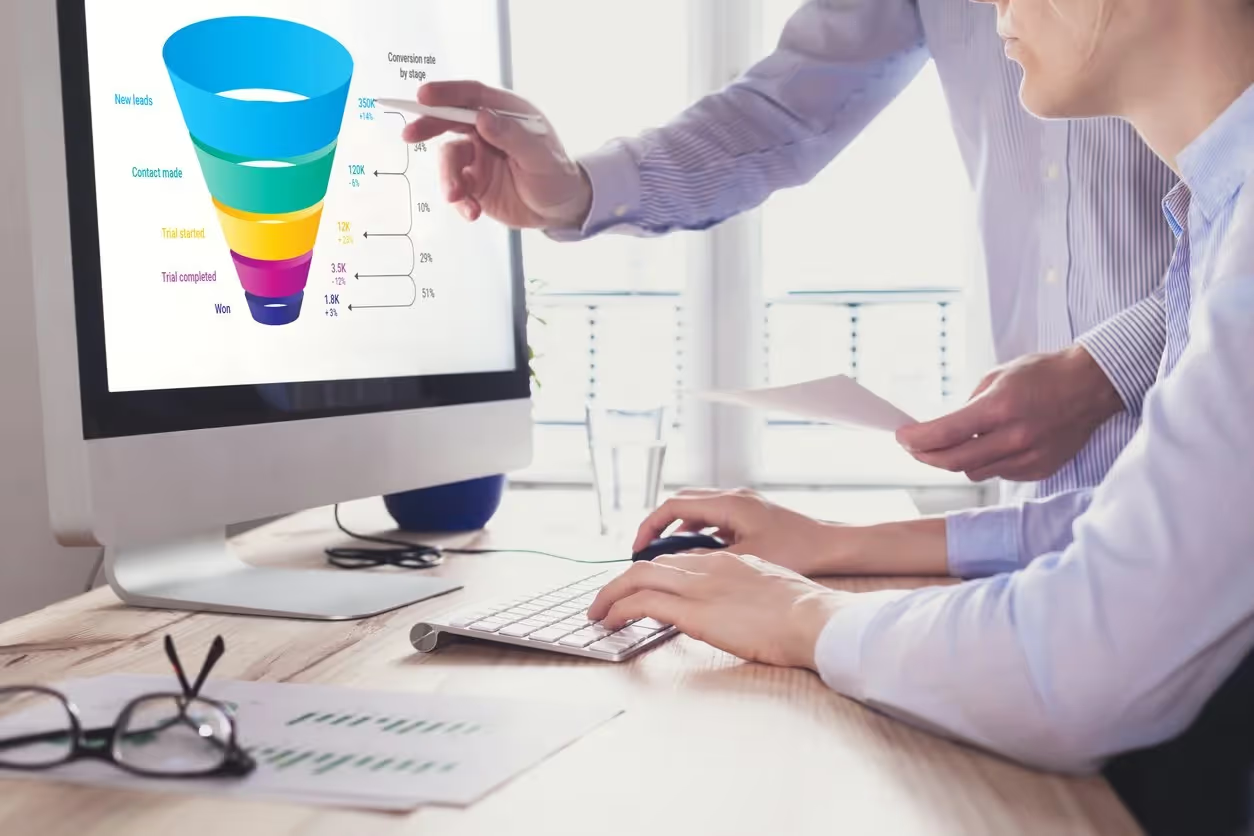
A system funnel is a structured, multi-stage process designed to guide potential customers from their first interaction to a final conversion and beyond. Unlike traditional sales funnels, which often focus only on sales, a system funnel integrates marketing, sales, and customer success into one seamless journey.
Platforms like System.io and frameworks such as Grant Cardone’s “turn clicks into clients” philosophy have redefined how businesses automate and scale these journeys. The goal is to ensure every step, from awareness to retention, is connected and optimized for the best experience.
System funnels work best when all business functions align around a shared strategy. For example, a SaaS company might use a system funnel to nurture free trial users into paid subscribers, while an ecommerce brand could drive first-time buyers toward loyalty programs. For a deeper dive into frameworks that support this structure, check out Funnel Framework Fundamentals.
Core Components of a High-Performing Funnel
Every effective system funnel relies on a few core building blocks, each designed to move prospects forward:
- Awareness: Use SEO, paid ads, and social media to attract new leads.
- Engagement: Deploy lead magnets, landing pages, and nurturing email sequences to keep prospects interested.
- Conversion: Optimize sales pages, order forms, and checkout flows for easy purchasing.
- Retention: Build automated email campaigns and post-sale support to encourage repeat business.
- Feedback Loops: Analyze data and customer feedback for ongoing improvements.
For instance, an ecommerce store might launch a paid ad to a landing page with a discount lead magnet, then use email automation to nurture leads and drive conversions. Each stage of the system funnel must work together to create a smooth, data-driven customer journey.
Why System Funnels Matter in 2026
System funnels are evolving rapidly due to new demands for automation, personalization, and integration. As more businesses rely on all-in-one platforms like System.io and adopt frameworks such as the 10X Sales Funnel System, the system funnel becomes a critical asset for predictable, scalable growth.
In 2026, businesses that leverage a system funnel will benefit from improved customer experiences and higher lifetime value. By personalizing touchpoints, streamlining handoffs, and using real-time analytics, companies can build revenue streams that are both resilient and scalable.
Ignoring the system funnel trend puts organizations at risk of falling behind competitors who are embracing these integrated, data-driven strategies. In today’s landscape, a well-built system funnel is no longer optional—it’s essential for long-term success.
The 2026 System Funnel Landscape: Trends and Technologies
Staying ahead in 2026 means understanding the technology shaping the system funnel landscape. Businesses are moving toward smarter, more integrated approaches, blending automation, AI, omnichannel strategies, and data-driven decision-making. Let’s break down the most important trends driving system funnel innovation.
All-in-One Platforms and Automation
The demand for simplicity and speed has fueled the rise of all-in-one platforms. With tools like System.io, businesses can build, automate, and analyze their entire system funnel in one place. This means less time toggling between apps and more focus on strategy.
Grant Cardone’s 10X Sales Funnel System emphasizes step-by-step, foolproof processes for maximum conversion. Startups benefit especially from System.io’s free plan, which allows up to 2,000 contacts and unlimited emails, making robust funnel technology accessible to all.
- Centralized dashboard for building and tracking funnels
- Integrated email automation and analytics
- Accessible pricing and scalability for growing teams
Modern system funnel platforms streamline every step, reducing friction and boosting productivity.
AI and Personalization
Artificial intelligence is now a core driver of system funnel success. AI-driven segmentation and real-time content recommendations let marketers tailor every touchpoint to individual user behavior. Dynamic content and behavioral triggers personalize the journey, increasing engagement and conversions.
Examples include automated email sequences that adapt based on user actions or preferences, and predictive analytics that help teams focus on high-potential leads. For a deeper look at these innovations, check out AI-Powered Sales Funnels.
AI ensures your system funnel stays relevant, personal, and effective in a crowded market.
Omnichannel Integration
A modern system funnel is no longer siloed. Omnichannel integration connects web, email, social, and paid channels, keeping messaging consistent and ensuring seamless transitions as prospects move through the funnel.
Competitors highlight the importance of unified messaging and smooth handoffs. For example, combining Facebook and Google Ads with funnel platforms extends reach and maintains continuity.
- Consistent brand messaging across all touchpoints
- Unified tracking and attribution for better insights
- Seamless transitions between channels for a better user experience
Omnichannel strategies future-proof your system funnel by meeting customers wherever they are.
Data-Driven Decision Making
Real-time analytics are central to optimizing the system funnel. Dashboards show performance at every stage, while A/B testing helps teams refine messaging, design, and offers for best results.
10X Statistics System is an example of ongoing measurement in action, enabling quick identification of bottlenecks and new opportunities.
- Track key metrics like conversion rates, drop-offs, and ROI
- Use data to guide iterative improvements
- Foster a culture of experimentation and learning
A data-driven system funnel delivers predictable, sustainable growth by turning insights into action.
Future-Ready Funnel Design
As digital habits evolve, so must funnel design. In 2026, mobile-first and responsive steps are essential. Integration with payment gateways and CRMs ensures a frictionless experience from first click to purchase.
Security and privacy are also top priorities. Businesses must build trust with transparent data handling and compliance with regulations.
- Mobile-optimized landing and checkout pages
- Quick, secure payment integration
- User data protection and privacy compliance
A future-ready system funnel adapts quickly, scales easily, and keeps both users and businesses secure.
Step-by-Step: Building a System Funnel for 2026
Building a system funnel for 2026 means more than just stringing together web pages. It’s about creating a seamless, automated journey that guides prospects from first impression to loyal customer. Let’s break down each step so you can confidently design, launch, and optimize your own high-performing system funnel.
Step 1: Define Your Funnel Goals and Target Audience
Start with crystal-clear objectives. What do you want your system funnel to achieve? Is it lead generation, product sales, or onboarding new users? Pinpointing your goals helps you measure success and stay focused.
Next, dive into your target audience. Segment your contacts using real data, not just gut instinct. For instance, SaaS founders often define their Ideal Customer Profiles (ICPs) by industry, company size, and pain points. This clarity ensures your system funnel speaks directly to the people most likely to convert.
Remember, a well-defined system funnel begins with understanding both your goals and your audience. This foundation sets the stage for every action you’ll take next.
Step 2: Map the Funnel Stages and User Journey
Visualize your system funnel as a series of connected stages: Awareness, Interest, Decision, Action, and Retention. Map out the user journey from the first ad click to post-purchase engagement.
Create a journey map to identify every touchpoint—ads, landing pages, emails, checkout forms—and flag where users might encounter friction. For example, a B2B SaaS journey might start with a LinkedIn ad, continue to a value-driven landing page, and end with a personalized onboarding sequence.
This mapping process allows you to anticipate user needs, reduce drop-offs, and ensure your system funnel flows smoothly from start to finish.
Step 3: Select and Set Up Your Funnel Platform
Choosing the right platform is critical for a scalable system funnel. Compare options like System.io and the 10X Sales Funnel System. Evaluate each platform for ease of use, integration capabilities, scalability, and cost.
Look for features such as drag-and-drop editors, automation tools, analytics dashboards, and payment gateway integration. For example, System.io’s free plan offers up to 2,000 contacts and unlimited emails, making it ideal for startups testing their first system funnel.
For more foundational and advanced practices, you might want to review Sales Funnel Best Practices as you select the right tools.
Step 4: Create High-Converting Funnel Assets
Your system funnel is only as strong as its assets. Design squeeze pages and landing pages that grab attention and collect leads. Use proven templates to speed up the process and maintain consistency.
Craft irresistible lead magnets—like ebooks, webinars, or checklists—that align with your audience’s needs. Write clear, compelling calls to action to guide users to the next step. Platforms like System.io offer customizable templates and drag-and-drop editors, making asset creation fast and intuitive.
Focus on clarity and value at every stage so your system funnel keeps users engaged and moving forward.
Step 5: Build Automated Email Sequences and Triggers
Automation is the engine of an effective system funnel. Set up email campaigns that nurture leads, deliver value, and encourage action. Use personalization tactics, such as merge fields and dynamic content, to make each message relevant.
For instance, if a user downloads a guide, trigger a tailored follow-up sequence that addresses their specific interests. Tools like System.io’s campaign builder let you automate these flows, saving time and increasing engagement.
A smartly automated system funnel ensures every contact gets the right message at the right moment, maximizing your chances of conversion.
Step 6: Integrate Payment Gateways and Checkout Flows
A seamless checkout experience is essential for any system funnel focused on sales. Connect reliable payment gateways like Stripe or PayPal to your funnel platform to handle transactions securely.
Optimize your checkout forms to minimize friction—ask only for essential information and consider offering one-click upsells or order bumps. Grant Cardone’s approach emphasizes the importance of “turning clicks into clients,” and a streamlined checkout is key to achieving this in your system funnel.
Test the process to make sure payments process smoothly, and don’t forget to confirm that all post-purchase automations trigger as expected.
Step 7: Launch, Test, and Iterate
Before you go live, perform a thorough QA of your system funnel. Test every step—form submissions, email triggers, payment processing—to catch errors before your audience does.
Once launched, use test data to validate your funnel logic. Platforms like System.io provide built-in testing features and analytics, helping you spot issues and make quick adjustments.
Remember, launching your system funnel is just the beginning. Continuous iteration is vital for long-term success.
Step 8: Post-Launch Optimization
After launch, monitor your system funnel’s performance with real-time dashboards. Track metrics like conversion rates, email opens, and drop-off points to identify opportunities for improvement.
Run A/B tests on key elements—headlines, CTAs, landing page layouts—to see what resonates best with your audience. Implement feedback loops by regularly reviewing results and making data-driven tweaks.
The best system funnel strategies are never static. Keep refining your process to stay ahead in 2026’s fast-moving digital landscape.
Optimization Tactics for Maximum Funnel Performance
Unlocking the full potential of your system funnel requires more than just setting it up. To maximize performance, you need continuous optimization across every stage. Let’s explore five critical areas where you can boost results, drive conversions, and stay ahead in 2026’s fast-moving digital world.
Conversion Rate Optimization (CRO) Techniques
Every system funnel can benefit from focused CRO tactics. Start by A/B testing headlines, CTAs, and layouts on your landing and sales pages. Even small tweaks can lead to significant gains.
- Refine forms by removing unnecessary fields to reduce friction.
- Optimize checkout pages for speed and clarity.
- Test different offers, bonuses, or guarantees to see what resonates.
Review your analytics to spot drop-offs, then target those steps for improvement. For a deeper dive into actionable CRO methods, check out these Funnel Optimization Techniques to help your system funnel achieve higher conversion rates.
Personalization and Segmentation
Personalizing your system funnel is essential for engaging users and driving results. Use behavioral data to segment your audience, then tailor messaging and offers to each group.
- Implement dynamic content blocks on landing pages and emails.
- Use automation rules to trigger relevant follow-ups based on actions.
- Segment by demographics, purchase history, or engagement level.
With robust segmentation, your system funnel can deliver the right message at the right time, increasing both trust and conversion rates.
Email Automation Best Practices
Effective email automation is the heartbeat of any high-performing system funnel. Set up nurturing sequences that provide value, answer objections, and guide leads toward action.
- Use drip campaigns to deliver content over time.
- Personalize emails with merge fields and dynamic sections.
- Monitor timing and frequency to avoid fatigue.
System.io enables unlimited emails, making it easy to experiment with different sequences and refine your approach. Consistent, value-driven messaging will keep your audience engaged throughout the funnel.
Retargeting and Multi-Channel Engagement
Don’t let prospects slip away after a single interaction. Retargeting and multi-channel strategies ensure your system funnel stays top-of-mind across platforms.
- Set up retargeting ads on Facebook, Google, and Instagram.
- Integrate SMS and push notifications for direct outreach.
- Sync messaging across web, email, and social for a seamless experience.
Leveraging the 10X Facebook System or Instagram System can amplify reach and reinforce your funnel’s message, driving return visits and conversions.
Data Tracking and Funnel Analytics
Measuring what matters is key to scaling your system funnel. Identify crucial metrics like conversion rates, drop-off points, customer lifetime value, and acquisition costs.
- Set up real-time dashboards to monitor funnel performance.
- Use A/B testing to optimize underperforming steps.
- Schedule regular reviews to spot trends and act quickly.
Platforms like System.io and the 10X Statistics System make it simple to visualize progress and uncover opportunities. With data-driven insights, you can continually refine your system funnel for sustained growth.
Measurement, KPIs, and Continuous Improvement
Measuring and improving your system funnel is the backbone of lasting growth. Without clear metrics and feedback, even the best funnels can underperform. Let’s break down how to evaluate, monitor, and optimize your system funnel for 2026 and beyond.
Defining Funnel KPIs for 2026
To unlock the full potential of your system funnel, start by defining clear KPIs that align with your business goals. For 2026, focus on metrics that reflect both efficiency and long-term value.
Key KPIs include:
- Lead-to-customer conversion rate
- Average order value (AOV)
- Customer lifetime value (CLV)
- Funnel velocity and sales cycle length
Tracking these KPIs ensures your system funnel delivers not just quick wins, but sustainable growth. Each metric reveals how prospects move through your funnel and where improvements can drive better results.
Implementing Real-Time Analytics
Modern system funnel platforms provide real-time analytics, letting you spot trends as they happen. Integrate your funnel tools with dashboards that update key metrics live, so you can make timely decisions.
With instant access to data, you can:
- Monitor conversions as they occur
- Track engagement with each funnel stage
- Identify spikes or dips in performance
Real-time insights empower you to act fast, adjusting your system funnel strategy to maximize every opportunity.
Diagnosing Bottlenecks and Drop-Offs
Every system funnel has friction points where prospects stall or exit. Use data to uncover these bottlenecks and address them before they impact revenue.
Look for:
- High form abandonment rates
- Low email open or click-through rates
- Drop-offs between funnel stages
By analyzing where users drop out, you can refine your system funnel and guide more leads toward conversion. Regular reviews ensure no opportunity slips through the cracks.
Continuous Optimization Loops
Optimization is never a one-time task for a system funnel. Establish regular feedback loops to keep performance high and adapt to new trends.
Build your loop around:
- Monthly funnel audits
- Scheduled A/B testing of key elements
- Ongoing reviews of dashboard data
Leverage insights from analytics and team feedback to iterate quickly. For advanced tactics, consider exploring AI in Sales Funnel Optimization to discover how predictive analytics can further enhance your system funnel results.
Benchmarking and Industry Standards
How does your system funnel compare to industry leaders? Benchmarking against standard conversion rates and engagement metrics helps set realistic, data-driven goals.
Study reports and competitor case studies to understand what high-performing funnels achieve. For more actionable ideas and proven tactics, check out Growth Funnel Strategies to see how top brands are structuring their system funnel for long-term growth.
By measuring performance, tracking KPIs, and continuously optimizing, you ensure your system funnel stays agile and competitive in the fast-evolving digital landscape.
Future-Proofing Your System Funnel Strategy for 2026 and Beyond
The digital world in 2026 will reward those who evolve and future-proof their system funnel approach. To stay ahead, businesses must embrace innovation, adapt to new regulations, and build strategies that can scale and flex with the market. Let's explore the essential ways to ensure your system funnel stands strong for years to come.
Embracing Emerging Technologies
Integrating new technologies is critical for a future-ready system funnel. Artificial intelligence is no longer optional. AI-driven personalization, predictive analytics, and smart automation help businesses anticipate customer needs and deliver tailored experiences.
- AI tools segment audiences and recommend content in real time.
- Predictive analytics forecast buying behaviors and optimize touchpoints.
- Voice search and conversational marketing platforms expand funnel reach.
For a deeper dive, see AI's Impact on Sales Funnels, which highlights how AI is transforming the system funnel landscape.
Adapting to Privacy and Compliance Changes
Regulations like GDPR and CCPA are reshaping how system funnel strategies handle data. Transparency and trust are must-haves. Your funnel should make it easy for users to opt in, control their data, and understand how it's used.
- Use clear, concise opt-in forms.
- Regularly update privacy policies and communicate changes.
- Build trust with visible compliance badges and transparent messaging.
By proactively addressing privacy, your system funnel will maintain customer trust and avoid costly compliance issues.
Scaling Funnels for Growth
Growth in 2026 means more than just bigger numbers. A robust system funnel must support multiple offers, products, and customer segments. Automation is key for managing complexity and driving upsell and cross-sell opportunities.
- Expand from single-product to multi-offer funnels.
- Automate follow-ups and personalized recommendations.
- Track user journeys to identify scaling opportunities.
Explore Data-Driven B2B Growth Strategies for insights into leveraging predictive data in your system funnel.
Building a Unified, Omnichannel Funnel System
Customers expect seamless experiences across every channel. A unified system funnel connects web, email, social, and even offline touchpoints, creating a consistent brand presence.
- Integrate your funnel with CRM, payment gateways, and ad platforms.
- Use unified messaging to avoid confusion and boost trust.
- Map the customer journey across channels to spot inconsistencies.
A strong omnichannel system funnel ensures prospects move smoothly from awareness to conversion, wherever they engage.
The Importance of Agility and Experimentation
Markets shift quickly, and your system funnel must adapt just as fast. Experimentation lets you test new offers, channels, and messaging without major risk.
- Run regular A/B tests on key funnel steps.
- Monitor results and pivot quickly based on data.
- Study competitor success stories to inspire your own experiments.
Agility keeps your system funnel competitive and responsive to new trends.
Expert Insights and Case Studies
Learning from others accelerates your progress. Analyze case studies of businesses that have scaled with advanced system funnel strategies.
- Look for examples in SaaS, ecommerce, and B2B sectors.
- Focus on what worked, what failed, and why.
- Apply key takeaways to your own funnel design.
By learning from the best, your system funnel will be primed for long-term success in 2026 and beyond.
Now that you’ve got a clear picture of how system funnels can drive growth and structure your marketing for 2026, it’s natural to wonder how to put these strategies into action for your own SaaS business. If you’re ready to move from scattered marketing efforts to a streamlined growth engine, you don’t have to figure it out alone. At RCKT, we specialize in helping founders like you build full-funnel demand systems designed for real, measurable results. Want to see what this could look like for your company? Learn more about RCKT's Growth Packages and take the next step toward predictable growth.