
Innovation in business moves faster than ever, making it crucial to stay ahead with the right tools. This article dives into 9 essential products in growth that are set to transform how companies approach expansion in 2026. For business leaders and professionals, products in growth represent the cutting-edge solutions driving marketing, analytics, automation, and artificial intelligence. These platforms empower organizations to scale smarter, analyze deeper, and connect with customers in new ways. Ready to discover which tools will give you a competitive edge? Let’s explore the future of growth together.
The Evolution of Growth Products in the Digital Era
The landscape of products in growth is evolving rapidly as digital transformation accelerates across industries. Startups and large enterprises alike are rethinking their growth strategies, embracing new technologies to stay ahead. Let us explore how these changes are shaping the future of business growth, and what it means for organizations aiming to thrive in 2026.
Shifting Business Needs and Digital Transformation
The rise of digital transformation has forced businesses to adapt at an unprecedented pace. Traditional growth models are giving way to agile, tech-driven approaches. Cloud-based SaaS platforms, robust automation, and advanced analytics are now central to the best products in growth.
Organizations that once relied on manual processes or legacy software are moving to integrated digital ecosystems. For example, companies like Shopify and Slack have turbocharged their expansion by leveraging scalable digital tools. As a result, businesses can now launch, test, and iterate growth initiatives faster than ever before.
The Role of AI and Data in Modern Growth Products
Artificial intelligence and machine learning are fundamentally reshaping how products in growth deliver value. AI-powered solutions are now embedded in everything from marketing automation to sales forecasting. According to recent statistics on AI adoption in marketing and sales platforms, more than 60% of businesses now use AI-driven tools to optimize campaigns and personalize customer experiences.
Data-driven decision-making is no longer optional. Growth teams who harness real-time analytics consistently outperform those who do not. Companies using AI for predictive analytics and segmentation are seeing measurable improvements in retention and revenue.
The Demand for Integration and Scalability
As businesses grow, the need for seamless integration and scalability in products in growth is more critical than ever. Siloed systems and disconnected tools can create bottlenecks, hindering progress and limiting agility.
Modern organizations are outgrowing legacy platforms that cannot keep up with rapid expansion. Insights from Gartner and Forrester highlight that scalable growth platforms are now a top priority for technology leaders. The ability to connect marketing, sales, and customer success tools into a unified ecosystem is essential for sustained growth.
Emerging Trends to Watch in 2026
Looking ahead, several trends are set to define the next generation of products in growth. Personalization and predictive analytics will become standard, enabling businesses to tailor experiences at scale. Automation will handle more complex tasks, freeing teams to focus on strategy.
Privacy-first solutions are rising in importance as regulations tighten and customers demand control over their data. Industry reports suggest that the most successful products in growth will balance innovation with security, offering flexible solutions that adapt to changing needs and compliance standards.
8 Essential Products in Growth to Watch in 2026
The landscape of products in growth is transforming rapidly as new solutions emerge to help businesses scale smarter and faster. In this section, we spotlight nine essential platforms and frameworks that are redefining how organizations approach growth. Whether you’re a startup founder, a growth marketer, or a product manager, these products in growth offer tools and strategies to streamline operations, analyze data, and automate key processes for 2026. From marketing automation to analytics, AI-powered insights, and collaboration tools, you’ll find a diverse mix of products in growth that cater to a wide range of needs and business sizes. If you’re interested in the strategic side of leveraging products in growth, check out this deep dive on Product-led growth frameworks explained for additional context.
1. HubSpot Marketing Hub
HubSpot Marketing Hub stands out as one of the most trusted products in growth for organizations seeking an all-in-one marketing solution. With pricing tiers ranging from Free, Starter ($50/mo), to Professional and Enterprise, it’s accessible for various business stages.
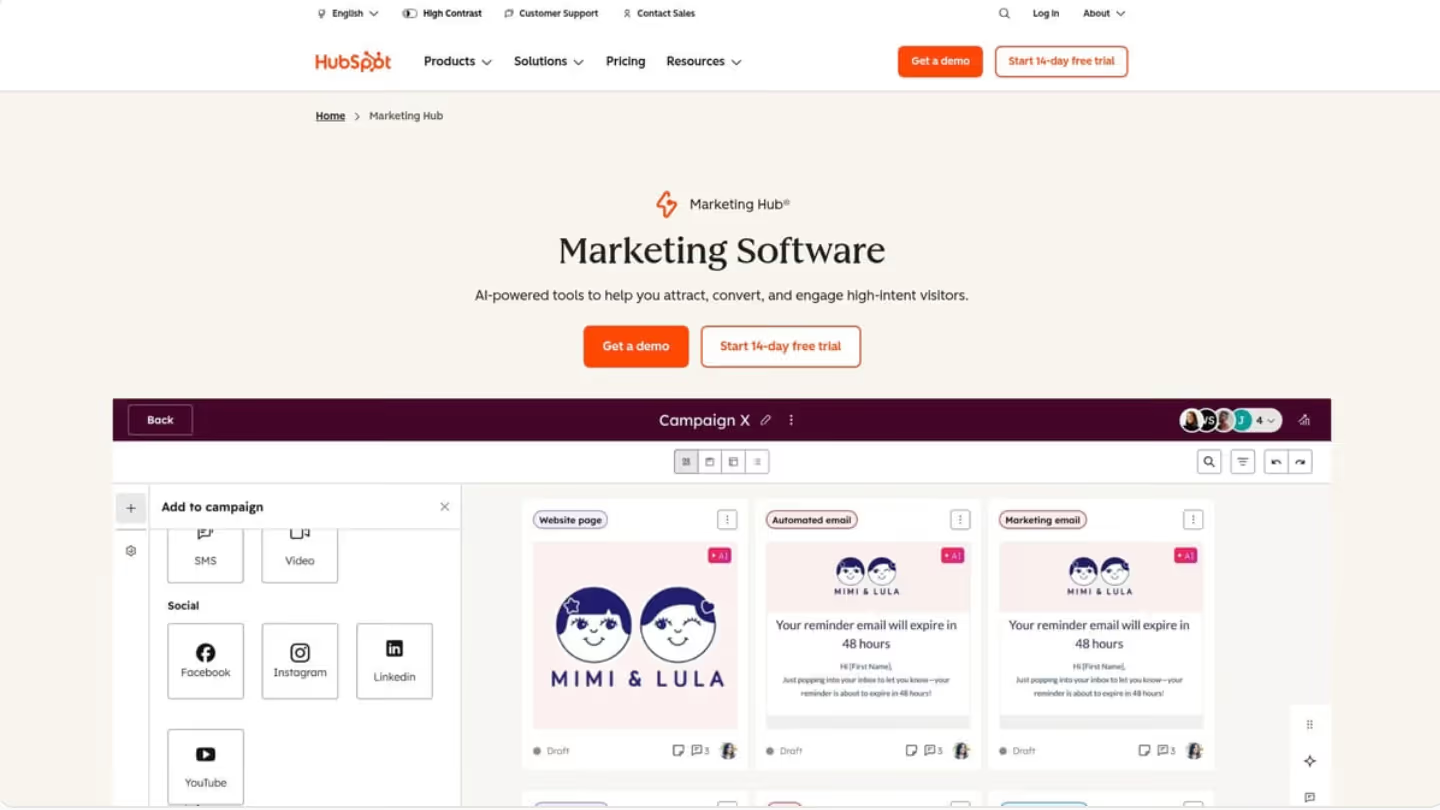
Core features include:
- Marketing automation workflows
- Seamless CRM integration
- Content management system (CMS)
- Deep analytics and reporting
Key benefits:
- Unified platform for campaign management
- User-friendly interface
- Robust app ecosystem
Best for:
- SMBs to larger enterprises looking for unified marketing and sales alignment
Ideal use cases:
- Lead generation
- Email marketing automation
- Multi-channel campaign tracking
Pros:
- Intuitive design
- Extensive third-party integrations
- Strong customer support
Cons:
- Advanced features can get pricey
- Customization has a learning curve
HubSpot remains a core player among products in growth due to its ability to centralize your marketing efforts and drive measurable results.
2. Amplitude Analytics
Amplitude Analytics is a powerhouse for companies aiming to optimize their products in growth through data-driven decision making. Its pricing includes Free, Growth (custom), and Enterprise (custom) plans to fit a variety of needs.
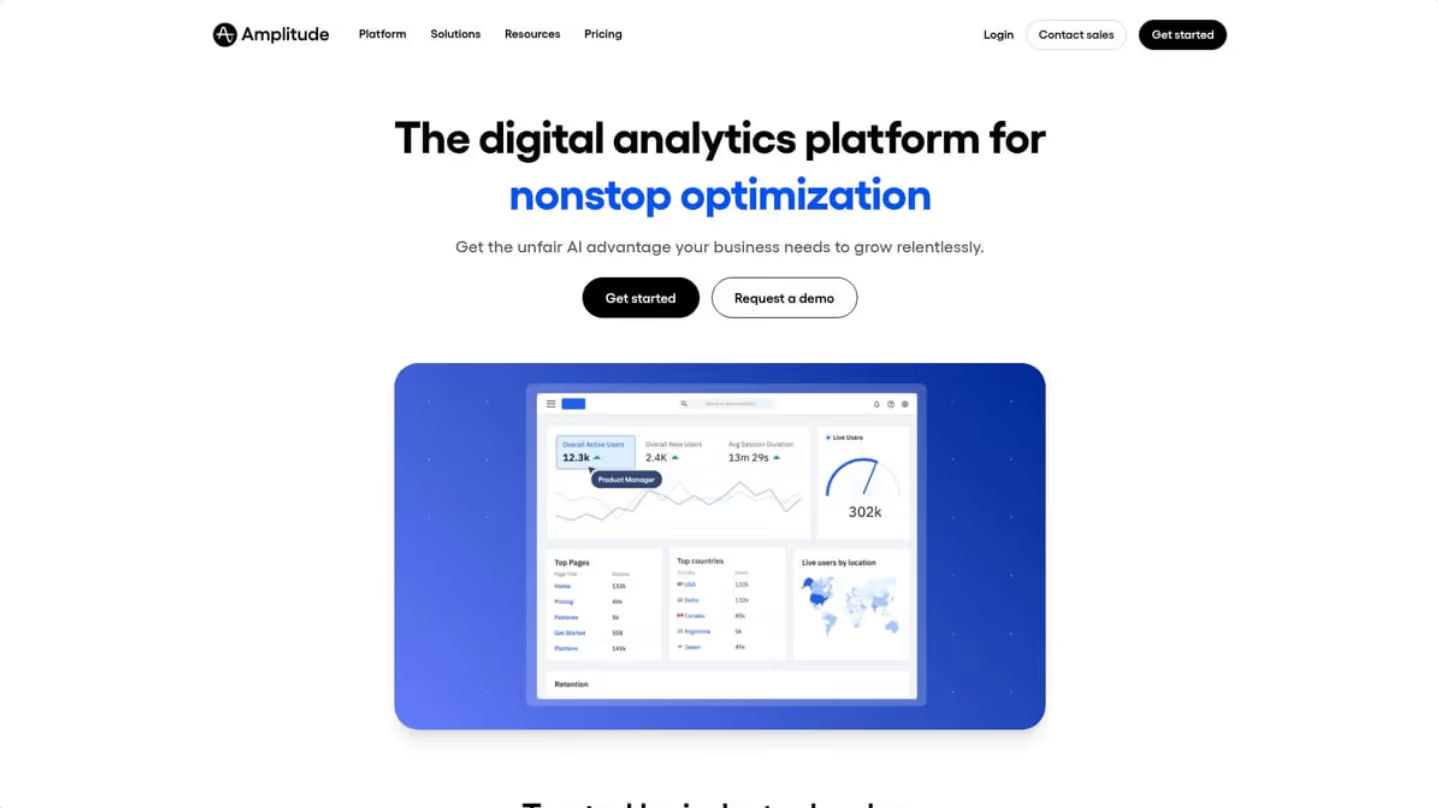
Core features:
- Product analytics and dashboards
- Behavioral cohort analysis
- Retention and conversion tracking
Key benefits:
- Actionable insights into user journeys
- Scalable for startups and large teams
Target audience:
- Product managers, SaaS growth teams, analytics-driven organizations
Ideal use cases:
- Product optimization
- Mapping and improving user journeys
Pros:
- Advanced analytics capabilities
- Flexible, customizable dashboards
Cons:
- Steep learning curve for new users
- Requires strong data literacy
Amplitude stands out among products in growth for its ability to turn complex data into clear, actionable strategies.
3. Clearbit
Clearbit is a leading data enrichment tool among products in growth, delivering real-time insights for smarter marketing and sales. With custom pricing based on usage and features, it adapts to diverse business needs.
Core features:
- Real-time data enrichment
- Lead scoring and segmentation
Key benefits:
- Enhances CRM data accuracy
- Boosts personalization and targeting
Target audience:
- B2B marketers, sales teams, SaaS companies
Ideal use cases:
- Account-based marketing
- Inbound lead qualification
Pros:
- Comprehensive global data coverage
- Seamless integrations with major CRMs
Cons:
- Premium pricing for advanced features
- Data accuracy can vary by region
Clearbit empowers products in growth by making targeting and segmentation more precise and effective.
4. Salesforce Sales Cloud
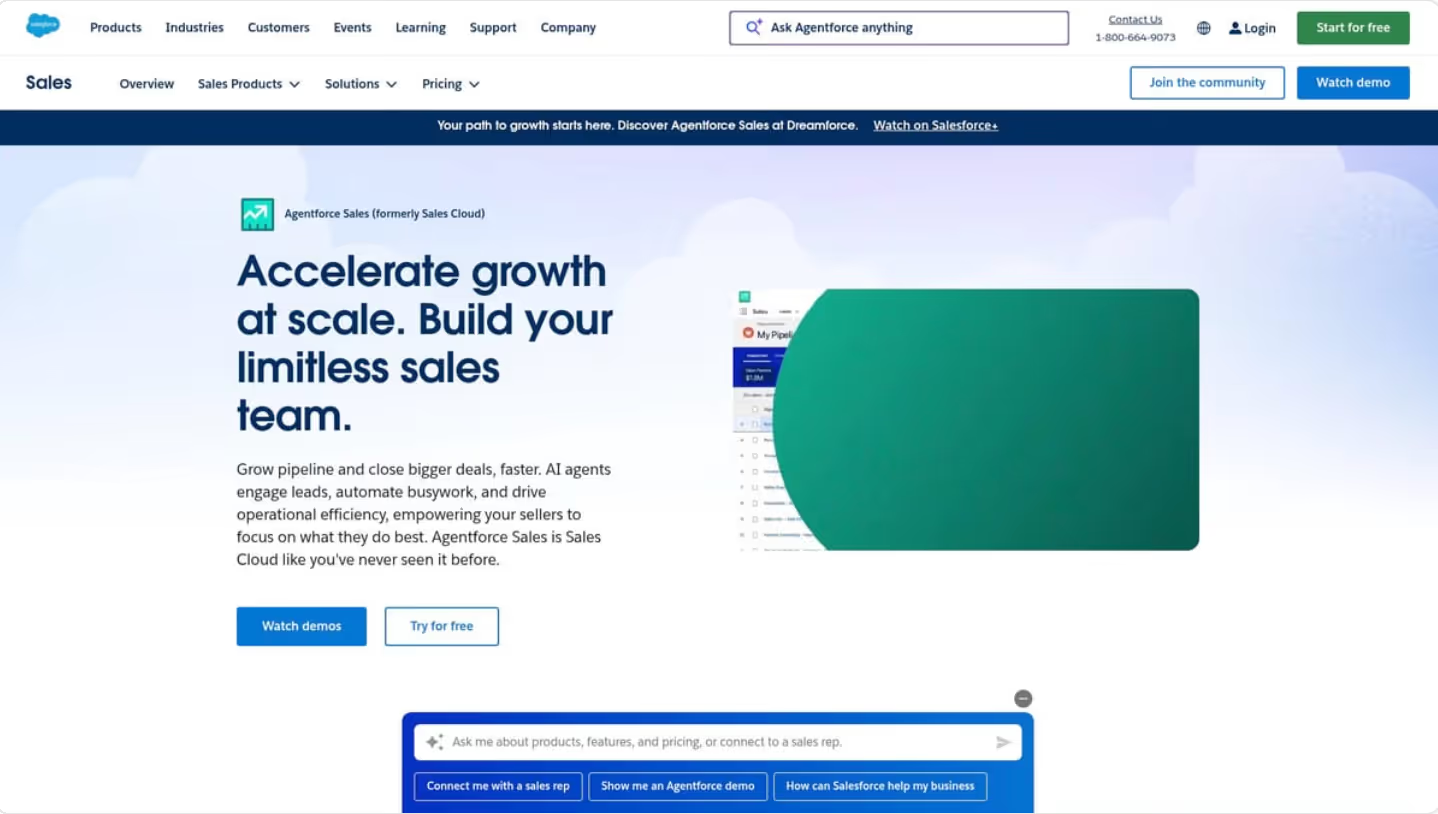
Salesforce Sales Cloud is a staple in the world of products in growth, especially for businesses seeking robust CRM and sales automation. Pricing includes Essentials ($25/user/mo), with Professional, Enterprise, and Unlimited options.
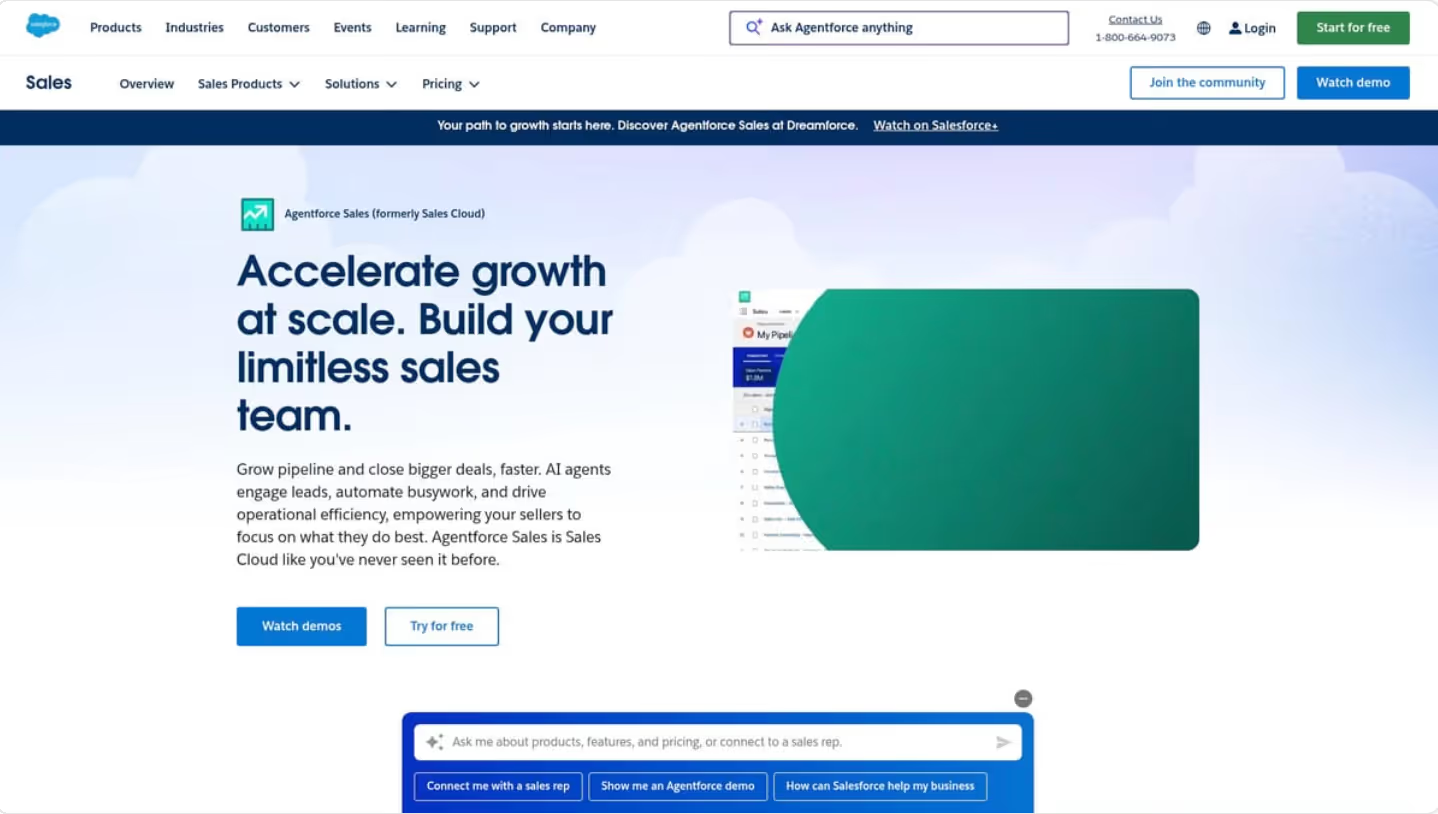
Core features:
- Comprehensive CRM
- Sales automation tools
- Pipeline and deal management
- AI-powered insights
Key benefits:
- Highly customizable workflows
- Extensive app marketplace
Target audience:
- Startups to large enterprises scaling sales teams
Ideal use cases:
- Automating sales processes
- Forecasting and advanced reporting
Pros:
- Scalable for any business size
- Reliable customer support
Cons:
- Can be complex to set up
- Onboarding requires time and resources
Salesforce remains a cornerstone among products in growth for teams needing flexibility and scalability in their sales operations.
5. Zapier
Zapier is a go-to automation tool in the products in growth toolkit, connecting over 5,000 apps for seamless workflows. Its pricing ranges from Free, Starter ($19.99/mo), to Professional, Team, and Company plans.

Core features:
- Workflow automation
- Multi-app integrations
- Triggers and actions setup
Key benefits:
- Enables no-code automation
- Saves time by eliminating repetitive tasks
Target audience:
- SMBs, startups, marketing and ops teams
Ideal use cases:
- Connecting disparate tools
- Automating lead handoff and notifications
Pros:
- Easy to use, even for beginners
- Vast app library
Cons:
- Advanced workflows require paid plans
- Some integration limits
Zapier’s value among products in growth is its ability to automate and streamline daily business tasks.
6. Intercom
Intercom has earned its place among products in growth with its modern approach to customer engagement and support. Pricing starts at $74/mo for the Starter plan, with Pro and Premium (custom) options.
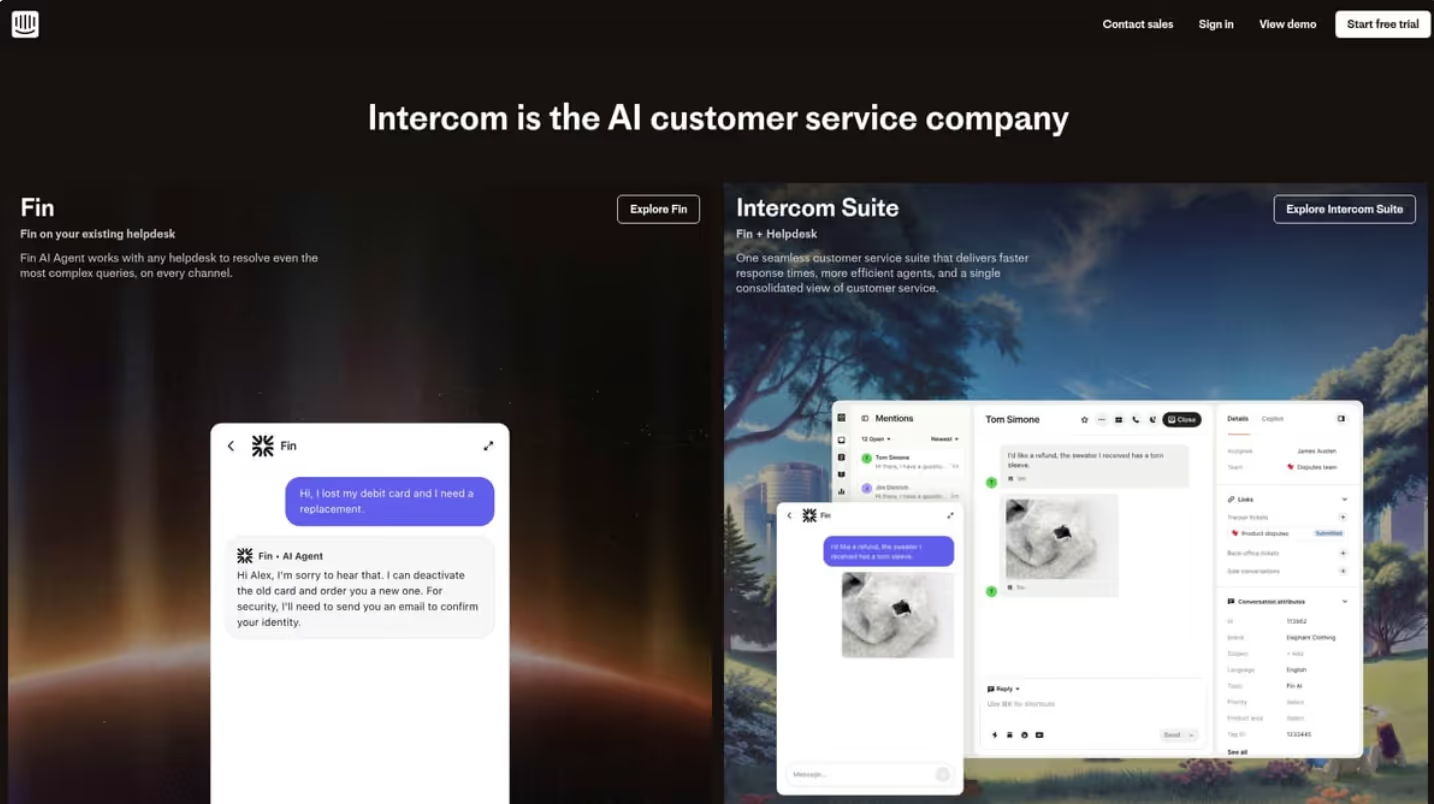
Core features:
- Customer messaging and live chat
- AI-powered chatbots
- Product tours and onboarding flows
- Integrated help desk
Key benefits:
- Improves customer onboarding and retention
- Enables proactive user engagement
Target audience:
- SaaS companies, customer success teams, digital businesses
Ideal use cases:
- Live support and chat
- Automated onboarding
Pros:
- Modern, intuitive interface
- Powerful automation options
Cons:
- Pricing can scale quickly as needs grow
- Some features require higher-tier plans
Intercom stands out in products in growth for driving customer satisfaction and loyalty through real-time communication.
7. Notion
Notion is a flexible collaboration platform that has become a favorite among products in growth for remote and hybrid teams. Pricing includes Free, Plus ($8/user/mo), Business, and Enterprise plans.
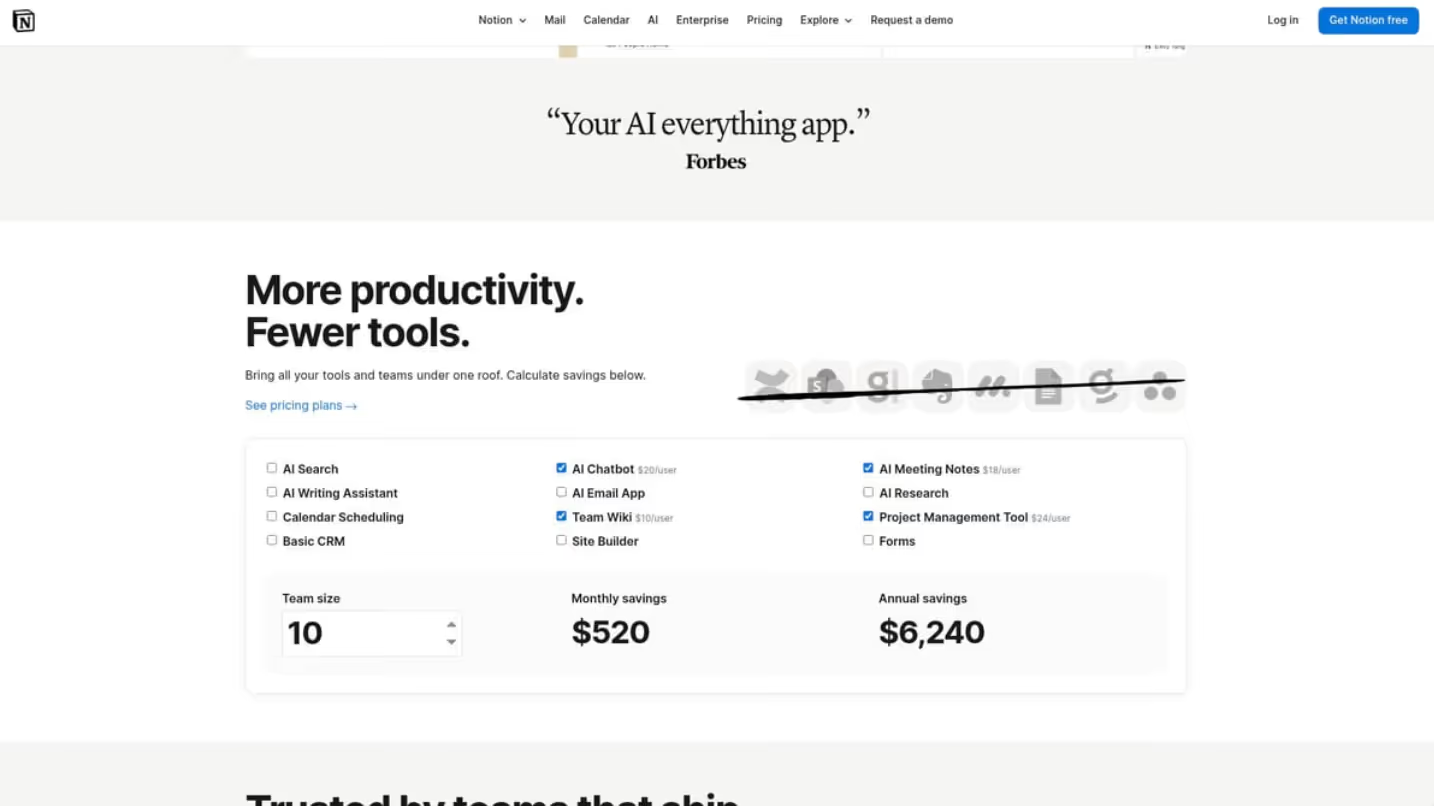
Core features:
- Workspace collaboration
- Knowledge management
- Project and task tracking
Key benefits:
- All-in-one workspace for documentation and project management
- Highly customizable for any workflow
Target audience:
- Startups, SMBs, remote-first companies
Ideal use cases:
- Team documentation and wikis
- Project management
Pros:
- Intuitive, modern design
- Adaptable to diverse team needs
Cons:
- Initial setup can be overwhelming
- Occasional sync delays
Notion exemplifies how products in growth can support agile, distributed teams with powerful knowledge management tools.
8. Gong.io
Gong.io brings AI-driven insights to the forefront of products in growth, transforming how sales teams analyze conversations and close deals. Pricing is custom, based on team size and feature requirements.
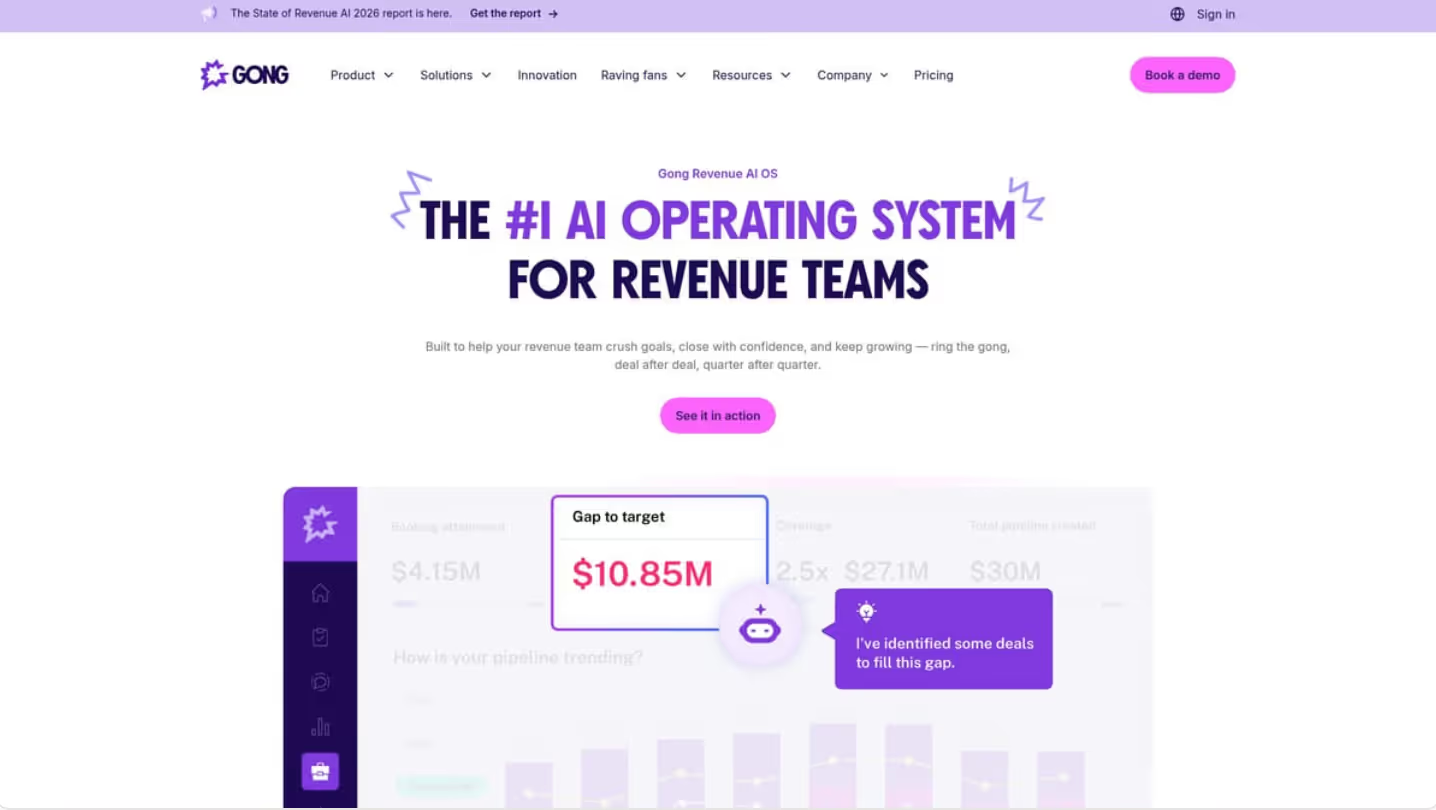
Core features:
- Conversation analytics
- Deal intelligence dashboards
- Sales coaching tools
Key benefits:
- Enhances sales performance with actionable feedback
- Boosts win rates through data-driven coaching
Target audience:
- Sales teams, revenue leaders, B2B organizations
Ideal use cases:
- Analyzing sales calls
- Managing and forecasting pipelines
Pros:
- Advanced analytics capabilities
- Drives continuous improvement
Cons:
- Premium pricing model
- Requires integration setup
Gong.io is a standout among products in growth for teams seeking to leverage AI for smarter, more effective sales strategies.
How to Evaluate Growth Products for Your Business in 2026
Selecting the right products in growth is crucial as you plan for 2026. The process goes beyond features and price tags. It requires a strategic approach that matches your business goals, supports future growth, and aligns with evolving compliance standards.
Whether you are a startup or an established enterprise, here is how to evaluate these solutions with confidence.
Aligning Product Features with Business Goals
Start by mapping the features of products in growth directly to your company’s objectives. Are you aiming for rapid user acquisition, improved retention, or better customer insights? Identify tools that offer features supporting those goals.
- For startups, look for products in growth that streamline onboarding and automate repetitive tasks.
- Larger organizations may need advanced analytics or customizable automation.
- Always prioritize solutions that solve your biggest growth bottlenecks.
Review case studies and talk to peers to see how similar businesses have aligned product capabilities with their desired outcomes. This step ensures your investment directly supports your growth vision.
Integration and Scalability Considerations
Integration is key when evaluating products in growth. Your chosen tools must work seamlessly with your existing tech stack to avoid data silos and workflow friction. Scalability is equally important, as your needs will evolve.
- Assess each product’s API support and third-party integrations.
- Consider how easily you can add users or features as your business expands.
- Check for compatibility with cloud-based platforms.
According to the Gartner report on scalable growth platforms, businesses investing in scalable solutions outperform their peers in agility and cost management. Make sure your products in growth can scale with you.
ROI, Pricing, and Total Cost of Ownership
When weighing products in growth, look past the sticker price. Calculate the total cost of ownership, including onboarding, training, and potential upgrades. Compare this against the expected return on investment.
- Estimate time savings and revenue impact from automation.
- Factor in potential improvements to funnel performance.
- Consider usage-based pricing versus flat fees.
For more on maximizing ROI, explore funnel optimization for sustained growth to see how the right products can drive measurable business outcomes.
Support, Community, and Vendor Reputation
Strong support and an active user community are vital for getting the most from products in growth. Reliable vendors should offer responsive customer service, detailed documentation, and regular updates.
- Read reviews on platforms like G2 and Capterra.
- Join user forums to learn from others’ experiences.
- Look for vendors with a proven track record in your industry.
A reputable partner can make onboarding smoother and help you stay ahead of industry changes.
Security, Compliance, and Privacy
Finally, ensure every product meets your security, compliance, and privacy requirements. Regulations like GDPR and CCPA are evolving, and non-compliance can be costly.
- Verify data encryption and secure authentication.
- Ask vendors about their compliance certifications.
- Ensure robust privacy controls for user data.
Choosing products in growth that prioritize security and compliance protects your business and builds customer trust.
Future Outlook: The Next Wave of Growth Products
The future of products in growth is set to be shaped by unprecedented technological advancements and evolving business needs. As we look ahead to 2026, staying informed about these innovations will be crucial for any organization aiming to maintain a competitive edge.
Anticipated Innovations in Growth Tech
The next generation of products in growth will be driven by rapid progress in AI, predictive analytics, and hyper-personalization. Industry leaders like Gartner, Forrester, and McKinsey predict that AI-powered solutions will enable businesses to automate more complex tasks, optimize customer journeys, and forecast growth opportunities with remarkable precision.
For example, advancements in conversational AI and real-time analytics are already transforming sales teams, as detailed in this overview of AI's impact on sales performance. Expect products in growth to leverage these technologies for:
- Enhanced customer segmentation and targeting
- Predictive lead scoring and pipeline management
- Automated content personalization
These innovations will continue to redefine how companies approach growth strategies.
The Importance of Adaptability and Continuous Learning
To maximize the benefits of new products in growth, organizations must embrace adaptability and foster a culture of continuous learning. The most successful growth teams are those that stay agile, quickly test emerging tools, and iterate on strategies based on real-time results.
Consider how startups that rapidly adopted AI-driven analytics platforms outpaced competitors still relying on manual processes. By remaining open to change, teams can:
- Respond swiftly to market shifts
- Integrate new technologies seamlessly
- Encourage cross-functional collaboration
This adaptability ensures that products in growth deliver sustained value over time.
Preparing Your Organization for Change
Implementing the latest products in growth requires more than just buying new tools. It involves creating an environment where experimentation is encouraged and learning is ongoing. Start by investing in comprehensive training and onboarding programs that empower employees to explore new features confidently.
Leadership buy-in is essential. When executives champion innovation, teams are more likely to embrace new products in growth. Steps to foster this culture include:
- Setting clear goals for tech adoption
- Recognizing and rewarding experimentation
- Facilitating open feedback channels
These practices help organizations stay ahead as growth technology evolves.
Key Takeaways and Strategic Recommendations
Looking ahead, organizations should prioritize regular evaluation of products in growth to ensure alignment with business goals. Stay proactive by monitoring trends, attending industry events, and engaging with thought leadership.
For actionable insights on integrating growth products into your strategy, refer to the Essential growth marketing guide 2026. Remember, the right products in growth can drive measurable impact, but success depends on ongoing learning and strategic adoption.
By staying curious and adaptable, your business can thrive in the next wave of growth innovation.
As you explore these nine essential growth products set to shape 2026, it’s clear that having the right strategy and tools can make all the difference—especially for B2B SaaS founders navigating rapid change. If you’re ready to move from scattered marketing efforts to a unified growth system that actually drives results, I encourage you to take the next step. You don’t have to figure it all out alone—let’s build a foundation for predictable, sustainable growth together.
Learn more about RCKT's Growth Packages