
Struggling to boost sales and close deals in the fiercely competitive 2026 market? You are not alone. The secret to sales success is mastering all the sales lifecycle stages, not just focusing on the final close.
Each stage presents unique opportunities to nurture leads, build trust, and drive sustainable revenue growth. By understanding the full journey, you can transform every interaction into progress for your business.
This guide demystifies the sales lifecycle stages, offering step-by-step strategies and practical insights tailored for today’s evolving business landscape. Ready to navigate every phase with confidence and precision? Read on for the latest trends, actionable tactics, and expert tips from prospecting to post-sale.
Understanding the Sales Lifecycle: Definition and Importance
Navigating the modern sales environment starts with a clear understanding of sales lifecycle stages. These stages form a repeatable process that guides prospects from first contact to loyal customer, ensuring no steps are missed along the way.
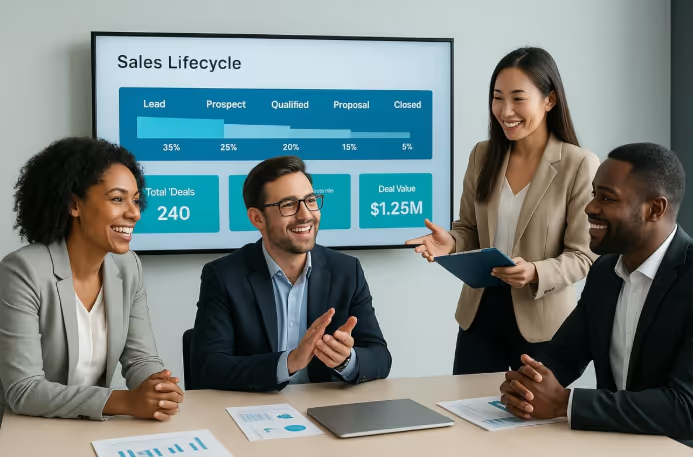
At its core, the sales lifecycle is a series of distinct phases that structure every sales journey. Typical sales lifecycle stages include:
- Prospecting
- Lead qualification
- Needs analysis
- Presentation or demo
- Handling objections
- Closing the deal
- Post-sale follow-up
Each stage plays a critical role, helping teams nurture leads, build trust, and drive predictable revenue. A well-defined process provides clarity, consistency, and measurable outcomes.
Why does this structure matter so much for today’s businesses? Companies that document and optimize their sales lifecycle stages can see up to 28% higher revenue growth, according to Harvard Business Review. A defined process reduces confusion, aligns sales and marketing, and makes it easier to onboard new reps. It also supports accurate forecasting and resource planning.
The impact goes beyond revenue. Mastery of sales lifecycle stages leads to higher customer retention, stronger relationships, and more repeat business. For example, B2B sales often involve longer cycles, multiple decision-makers, and customized solutions, while B2C sales move faster, with more emphasis on emotional triggers and volume. Understanding these differences allows teams to tailor their approach and maximize results.
In 2026, digital transformation and AI are reshaping how organizations manage sales lifecycle stages. AI-driven tools automate lead scoring, personalize outreach, and predict customer behavior, making every phase more efficient and data-driven. For more on building a robust structure, see these sales funnel best practices.
Real-world success stories highlight the value of a documented process. SaaS companies, for instance, have scaled rapidly by mapping out sales lifecycle stages, leveraging CRM platforms, and creating playbooks for each phase. Their teams can spot bottlenecks, test improvements, and adapt quickly to market changes.
Common misconceptions persist, such as thinking the sales lifecycle is only about closing deals or that one size fits all. In reality, each stage deserves attention, and customization is key for different industries and business models.
By understanding and optimizing the sales lifecycle stages, businesses set themselves up for long-term growth, stronger customer loyalty, and a more agile sales organization.
Stage 1: Prospecting and Lead Generation in 2026
Prospecting and lead generation are the vital first steps in the sales lifecycle stages. In 2026, mastering these phases means harnessing technology, adapting to new buyer behaviors, and targeting high-potential leads with precision. Let’s explore how modern sales teams can thrive in a landscape shaped by innovation and data.

Modern Prospecting Channels and Tactics
The sales lifecycle stages begin with prospecting, which has evolved far beyond cold calls and generic emails. In 2026, sales professionals leverage:
- Social selling platforms like LinkedIn Sales Navigator for targeted outreach
- AI-powered tools that analyze massive datasets to identify promising prospects
- Intent data platforms revealing which companies are actively researching solutions
These channels make it possible to engage leads at the right moment with relevant, personalized messaging. AI-driven prospecting not only saves time but also improves accuracy, ensuring efforts are focused on high-value opportunities. According to Salesforce, 68% of B2B companies report better lead quality from targeted prospecting strategies.
Refining your ideal customer profile (ICP) is now more scientific than ever. Sales teams use predictive analytics to update ICPs in real time, adjusting outreach based on shifting market signals. By integrating CRM systems, all prospect data is captured seamlessly, making it easier to track where leads are in the sales lifecycle stages.
For a deeper look at how AI agents are reshaping sales teams and prospecting tactics, check out AI's Transformation of Sales Teams. This trend is a game-changer for staying competitive in 2026.
Overcoming Prospecting Challenges in 2026
Information overload is a real challenge for modern prospecting. With prospects bombarded by messages daily, breaking through the noise demands creativity and persistence. Personalization is key—generic outreach is quickly ignored.
Another hurdle is the increasing use of gatekeepers and automated filters. To navigate these, sales professionals must:
- Craft compelling, relevant subject lines and intro messages
- Use intent signals to time their outreach perfectly
- Leverage referrals and mutual connections for warm introductions
Measuring prospecting effectiveness is crucial in the sales lifecycle stages. Track metrics such as response rates, conversion percentages, and the number of qualified leads entering your pipeline. Regularly analyze these numbers to optimize strategies and maximize ROI.
By staying agile, using the latest tools, and focusing on relationship-building, sales teams can ensure prospecting remains a strong foundation for all sales lifecycle stages in 2026.
Stage 2: Lead Qualification and Needs Analysis
Qualifying leads is a pivotal step within the sales lifecycle stages. This process helps sales teams prioritize which prospects are most likely to convert, making their efforts more efficient and effective. In today's fast-paced 2026 market, lead qualification goes beyond basic checklists. It requires a deep understanding of both the buyer’s needs and the business’s ideal customer profile.
The core of lead qualification is determining whether a prospect fits the criteria necessary to move forward in the sales lifecycle stages. Teams use structured frameworks such as BANT (Budget, Authority, Need, Timing), CHAMP (Challenges, Authority, Money, Prioritization), and MEDDIC (Metrics, Economic buyer, Decision criteria, Decision process, Identify pain, Champion) to assess each opportunity. In 2026, these frameworks have evolved to incorporate more data-driven insights and predictive analytics, helping sales professionals spot high-value leads earlier.

Modern sales teams are also shifting toward consultative and value-based selling. This means not just checking boxes but engaging in meaningful conversations to uncover the real needs and motivations behind each lead. Techniques like open-ended questioning, active listening, and practicing empathy are now standard. For example, instead of simply asking about budget, a rep might explore what business challenge the buyer is trying to solve and how the solution fits into their broader goals.
Structured qualification has measurable benefits. According to HubSpot, sales teams that use a formal qualification process see deal cycles that are 30 percent faster. For B2B SaaS companies, qualification criteria may include company size, tech stack, and readiness to implement new solutions. Enterprise sales teams might look at global reach, regulatory needs, or multi-stakeholder involvement. SMB-focused reps could focus on immediate pain points and decision-maker accessibility.
However, even with robust frameworks, common pitfalls can derail the process. Misaligned qualification, where teams focus on the wrong attributes, can waste valuable time. Premature pitching—presenting solutions before understanding needs—often leads to lost deals. Over-qualification, where reps set the bar too high, might eliminate leads with real potential.
To avoid these issues, many organizations use tools and templates to standardize their qualification process. CRM systems, lead scoring models, and digital checklists help ensure consistency. For actionable guidance on enhancing your qualification process, explore these lead scoring strategies designed to improve accuracy and efficiency at this stage of the sales lifecycle stages.
Mastering lead qualification and needs analysis ensures that every prospect receives the right attention, at the right time, within the sales lifecycle stages. This focus not only shortens deal cycles but also increases win rates and long-term customer satisfaction.
Stage 3: Presenting Solutions and Handling Objections
When you reach the third stage of the sales lifecycle stages, the spotlight shifts to presenting your solution with clarity and confidence. In 2026, buyers expect more than just polished slides—they want a tailored experience that speaks directly to their challenges and goals.
Crafting a compelling presentation begins with understanding your prospect’s unique context. The most effective sales lifecycle stages rely on personalization, ensuring each conversation feels relevant. Start by weaving in the buyer’s pain points, industry trends, and success stories that mirror their journey.

Demonstrate value by focusing on outcomes, not just features. Use storytelling to illustrate how your solution has transformed similar businesses. Interactive demos, live product walkthroughs, and dynamic proposals keep buyers engaged and help you stand out in crowded markets.
Buyers are more discerning than ever. According to Gartner, 77% say that sales presentations must be personalized to their needs. This means leveraging data, customer insights, and industry benchmarks to make your pitch resonate. For more actionable frameworks, explore these solution selling techniques that align with today’s buyer expectations.
Objections are a natural part of the sales lifecycle stages. Common objections include budget constraints, uncertain timing, or unclear decision authority. Anticipate these concerns and prepare clear, concise responses. Use frameworks like LAER (Listen, Acknowledge, Explore, Respond) or the Feel-Felt-Found method to create space for dialogue and understanding.
Social proof is a powerful tool. Share testimonials, case studies, or customer results to overcome skepticism and reinforce trust. In 2026, remote and hybrid selling are the norm. Mastering video calls, digital presentations, and asynchronous communication is essential for success at this stage of the sales lifecycle stages.
Advanced Objection Handling Strategies
Proactive objection handling sets top performers apart in the sales lifecycle stages. Rather than waiting for concerns to surface, address common issues early in your conversation. This approach builds credibility and demonstrates empathy.
The LAER framework is a reliable structure for navigating tough objections:
- Listen fully to the concern without interruption.
- Acknowledge the prospect’s feelings and situation.
- Explore the root cause behind the objection with follow-up questions.
- Respond thoughtfully, providing relevant solutions or alternatives.
Another effective technique is the Feel-Felt-Found method. For example, you might say, “I understand how you feel. Other clients have felt the same way about implementation time, but they found our onboarding support made the process smooth and quick.” This method helps prospects relate and see a positive path forward.
Building trust and rapport is crucial in high-stakes negotiations. Be transparent, share real-world examples, and validate the prospect’s concerns. In B2B sales, successful objection turnarounds often hinge on demonstrating genuine understanding and offering tangible solutions.
Mastering objection handling in the sales lifecycle stages means being prepared, empathetic, and adaptable. Whether you’re addressing concerns in person, over video, or through email, the goal is always to keep conversations moving toward a win-win outcome.
Stage 4: Closing the Deal and Securing Commitment
The closing stage is the pivotal moment in the sales lifecycle stages. This is where all your previous efforts—prospecting, qualification, and solution presentation—come together as you guide the buyer toward a final commitment. Effectively navigating this phase is essential for converting opportunities into revenue and building long-term business relationships.
What Is the Closing Stage?
Closing is more than just getting a signature. It’s about confirming value, addressing any last-minute concerns, and ensuring both parties are aligned. In the context of sales lifecycle stages, closing is the bridge between intent and action. It requires careful attention to buyer signals and a deep understanding of the customer journey, as explored in the customer journey in B2B sales.
Proven Closing Techniques for 2026
Top-performing sales professionals rely on a mix of closing strategies. In 2026, these include:
- Assumptive Close: Acting as if the buyer has already decided, guiding them to next steps.
- Consultative Close: Summarizing how the solution addresses the buyer’s unique needs.
- Summary Close: Recapping agreed-upon benefits and outcomes before asking for commitment.
- Urgency Close: Highlighting time-sensitive benefits or limited availability.
According to Salesforce, reps who use multiple closing techniques close 33% more deals. Mastery of these tactics within the sales lifecycle stages gives teams a measurable edge.
Timing, Contracts, and Legal Considerations
Recognizing buying signals is key—look for verbal cues, questions about implementation, or requests for specific terms. Timing your ask can be the difference between a win and a stalled deal. In 2026, contract management is increasingly digital, with e-signatures and AI-driven workflow automation reducing delays. For more on how AI is transforming productivity at the close, see the insights on AI's Impact on Sales Productivity.
Modern closers must also navigate procurement processes, compliance checks, and legal reviews. Being proactive with documentation and anticipating approval bottlenecks keeps the deal moving forward within the sales lifecycle stages.
Overcoming Closing Challenges
Common closing hurdles include:
- Buyer indecision or internal delays
- Last-minute objections or changed requirements
- Competing offers from rivals
To overcome these, remain patient, revisit value, and seek clarity on what’s holding the deal back. Real-world closers use empathy, transparency, and persistence to address concerns and guide buyers to a confident “yes.”
Reinforcing Commitment After the Close
Closing doesn’t end with a signature. Effective follow-up actions include:
- Sending a personalized thank-you note
- Providing clear onboarding instructions
- Scheduling a kickoff call or training session
These steps reinforce trust and reduce buyer’s remorse, setting the stage for long-term success in the sales lifecycle stages.
Stage 5: Post-Sale Engagement and Customer Success
Driving long-term growth in the sales lifecycle stages goes far beyond closing the deal. Today, post-sale engagement is the secret weapon for building loyalty, boosting retention, and unlocking new revenue streams. Without a strong focus here, even the best sales strategies can fall flat.
Why Post-Sale Engagement Matters
The sales lifecycle stages do not end when a contract is signed. In fact, this is where the journey truly begins for your customer. Companies with robust post-sale programs see customer retention rates soar by up to 50%, according to Forrester. Retaining happy clients is more cost-effective than acquiring new ones, and satisfied customers often become your best advocates.
Personalized onboarding is the first step. A warm welcome, clear training, and responsive support set the tone for a positive partnership. When customers feel valued from day one, they are more likely to adopt your product and stay engaged.
Nurturing Relationships for Growth
Ongoing engagement is key in the sales lifecycle stages. Regular check-ins keep the conversation alive and help you spot opportunities to deliver extra value. Establish feedback loops through surveys or one-on-one calls to understand evolving needs. Use these insights to tailor your approach and address concerns before they escalate.
Customer success teams play a central role here. Their mission is to ensure clients achieve their goals, driving renewals and uncovering upsell opportunities. Consider launching loyalty programs or referral incentives to reward advocacy and encourage word-of-mouth growth.
- Schedule proactive check-ins after onboarding
- Offer exclusive resources or training sessions
- Recognize and celebrate customer milestones
Leveraging Technology and AI for Customer Success
Technology is transforming how businesses manage post-sale engagement within the sales lifecycle stages. Advanced analytics, automation, and AI-driven insights help teams anticipate customer needs and personalize outreach at scale. For a deeper dive, explore AI's Role in Revenue Performance, which highlights how AI can enhance revenue outcomes and customer relationships in 2026.
With smarter tools, teams can monitor usage patterns, predict churn risks, and trigger timely interventions. CRM integration ensures data flows seamlessly, making it easier to deliver a consistent, high-touch experience.
Overcoming Challenges and Measuring Success
Transitioning from sales to customer success can be tricky. Clear communication and documented handoffs are essential to prevent confusion and unmet expectations. Set realistic goals early, and regularly review progress with your clients.
To measure the impact of your post-sale strategy, track key metrics such as Net Promoter Score (NPS), customer satisfaction (CSAT), retention rates, and lifetime value. These indicators reveal which sales lifecycle stages are working and where to improve.
Prioritizing post-sale engagement ensures your business not only retains more customers but also unlocks greater value from every relationship. By investing in these final sales lifecycle stages, you set the stage for long-term success and sustainable growth.
Now that you’ve seen how each stage of the sales lifecycle shapes your results, it’s clear that having a structured, integrated approach can be a game changer—especially for B2B SaaS founders in a fast-evolving market. If you’re ready to move from scattered tactics to a proven growth system that connects strategy and execution, you don’t have to figure it all out on your own. Discover how you can apply these insights and accelerate your revenue with the right support.
Learn more about RCKT's Growth Packages and see how RCKT helps founders build full-funnel demand engines for real, measurable growth.