In 2026, the marketing landscape is changing rapidly as data and technology drive every decision. Without a well-structured marketing system, businesses risk missing out on growth opportunities and falling behind their competitors.
This guide is designed to help founders, marketers, and business leaders create a future-ready marketing system that delivers predictable results, scalability, and clear returns on investment. You’ll discover frameworks and strategies to design, implement, and optimize a holistic approach tailored for the demands of 2026.
We’ll break down the essential components, from strategic planning and technology integration to analytics, automation, team structure, and best practices for long-term growth. Ready to transform your marketing? Let’s get started.
What Is a Marketing System?
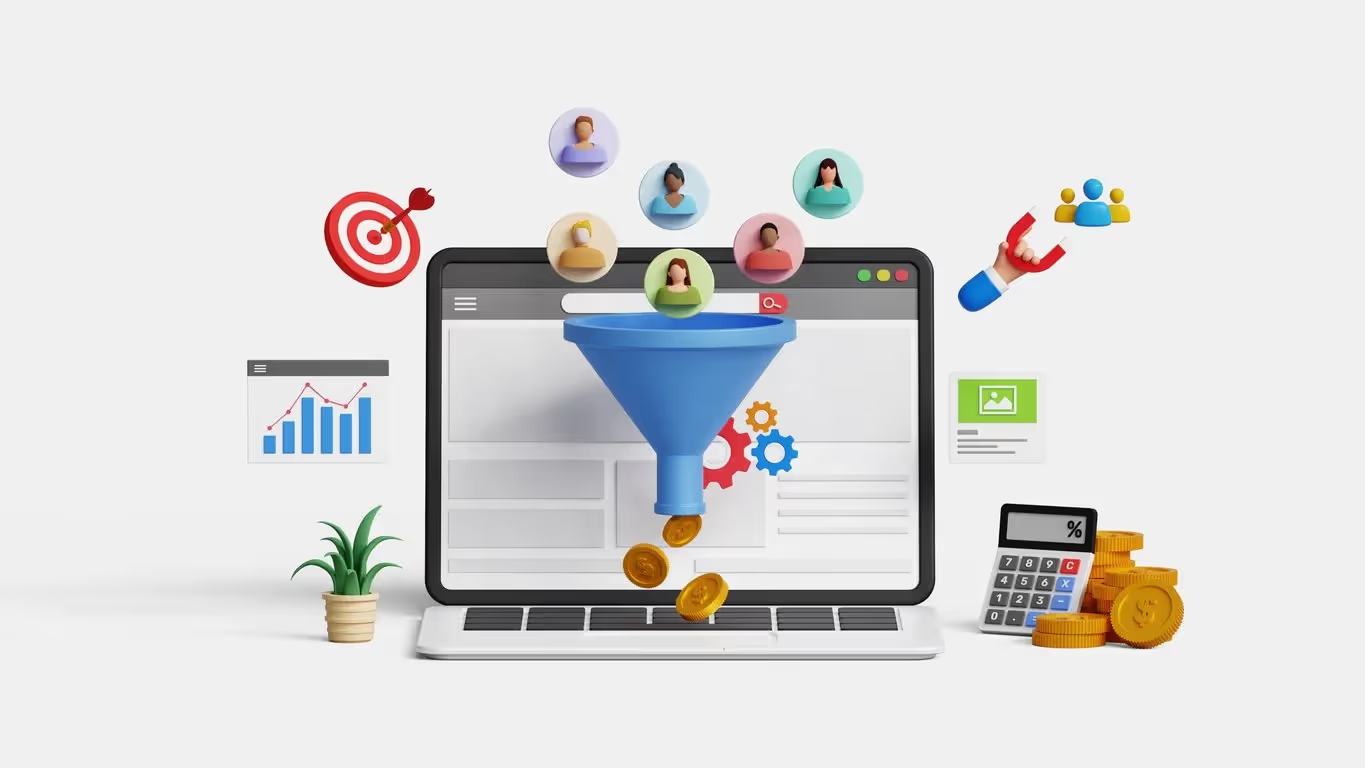
In 2026, a marketing system is more than a set of isolated tools or sporadic campaigns. It is a repeatable, integrated framework that unites processes, technology, and people to drive consistent business growth. Unlike one-off tactics that fade quickly, a marketing system delivers predictability and scalability by connecting both digital and offline touchpoints. This system acts as the backbone for unifying campaigns, content, and channels, ensuring every customer interaction feels seamless and intentional. For instance, airlines like Qantas use structured, long-term campaigns as part of their marketing system, resulting in higher efficiency and brand recognition. According to Wrike, companies with defined systems see up to 30% higher marketing ROI.
Defining a Marketing System in 2026
A marketing system in 2026 is built on the idea of repeatability and integration. It brings together automated tools, clear processes, and defined roles to create an environment where marketing becomes predictable and scalable. Instead of relying on ad hoc efforts, businesses embrace systems that cover both online and offline interactions. This unified approach ensures every campaign, message, and channel is aligned for maximum impact. Airlines like Qantas show how a marketing system can drive long-term engagement through consistent, structured campaigns. The data is clear: organizations with a marketing system experience up to 30% higher ROI, thanks to their ability to optimize and automate key activities.
Key Benefits of a Unified Marketing System
The advantages of adopting a unified marketing system are significant. First, businesses save time and reduce costs by relying on repeatable workflows. This efficiency translates into better lead generation and higher conversion rates. A marketing system also boosts brand consistency, making every customer interaction feel cohesive and trustworthy. With integrated tools and processes, decision making becomes data-driven, allowing for real-time performance tracking and quick adjustments. Ultimately, a marketing system makes it easier to scale and adapt to changing markets. Service firms, for example, use marketing systems to streamline community building and client onboarding, resulting in a smoother customer journey and stronger loyalty.
Time and cost savings
Improved lead generation and conversions
Enhanced brand consistency
Real-time data-driven decisions
Scalable processes for growth
Core Components of a Modern Marketing System
A successful marketing system relies on several essential building blocks. Strategic planning and goal setting form the foundation, ensuring every activity aligns with business objectives. Content creation and distribution are central, supported by robust campaign management and automation. Lead generation and nurturing processes help guide prospects through the funnel, while analytics and reporting provide visibility into what’s working. Finally, customer onboarding and retention processes keep clients engaged long after the initial sale. For a deeper dive into how marketing funnels fit within this larger system, see Marketing funnel systems explained.
Strategic planning and goal setting
Content creation and distribution
Campaign management and automation
Lead generation and nurturing
Analytics and reporting
Customer onboarding and retention
Common Challenges and Pitfalls
Despite the clear benefits, building a marketing system comes with challenges. Fragmented tools and processes often lead to inefficiencies, making it hard to maintain momentum. A lack of clarity around messaging or target audience can dilute results. Inconsistent execution and accountability gaps cause important tasks to fall through the cracks. Many teams still rely too heavily on manual tasks, missing out on the efficiency automation brings. Finally, organizations that fail to regularly optimize their marketing system may miss critical opportunities for growth. Addressing these pitfalls is crucial for any business aiming to stay competitive in 2026.
Fragmented tools and workflows
Unclear messaging and audience targeting
Gaps in execution and accountability
Over-reliance on manual processes
Missed optimization opportunities
Laying the Foundation: Strategy, Messaging & Goals
Establishing a solid foundation is essential for any effective marketing system. Before launching campaigns or picking tools, you need clarity on who you serve, what you say, and how you measure success. This section walks through the strategic groundwork that ensures every part of your marketing system delivers results in 2026.
Market and Audience Definition
Defining your audience is the bedrock of a future-ready marketing system. Start by creating an Ideal Customer Profile (ICP) based on data, feedback, and market trends. Segment your audience using firmographics, behaviors, and needs.
Utilize surveys, social listening, competitor analysis, and CRM insights to gather actionable intelligence. Align your product’s strengths with real-world pain points. For example, B2B SaaS companies often refine their ICP to focus on industries or roles most likely to convert, resulting in more targeted, effective campaigns.
A marketing system built on precise audience understanding can adapt quickly as markets shift, ensuring you never waste resources on the wrong prospects.
Crafting Messaging That Converts
Your messaging is the glue that holds your marketing system together. Develop clear value propositions and consistent messaging pillars that resonate across all platforms. Address your audience’s pain points, desired outcomes, and motivations at every touchpoint.
To keep messaging unified and impactful, follow proven frameworks like the brand messaging framework essentials. This approach helps you articulate what makes your brand unique and builds trust over time.
Service businesses, for example, often leverage testimonials and case studies to build credibility and authority, further strengthening their marketing system’s impact.
Setting Measurable Goals and KPIs
A marketing system thrives on clear, measurable goals. Use frameworks such as SMART or OKRs to define objectives that are specific, attainable, and time-bound. Identify both leading and lagging indicators that track progression through the funnel, from lead generation to revenue.
Select KPIs that match each funnel stage: leads captured, engagement rates, conversions, and customer value. According to industry research, companies that consistently track KPIs grow 20% faster, proving the value of disciplined measurement.
Align your goals with business outcomes, ensuring your marketing system remains focused and accountable.
Building the Marketing Plan and Calendar
An actionable plan brings your marketing system to life. Structure annual, quarterly, and campaign-specific plans to maintain momentum and flexibility. Map out major initiatives, content themes, and campaign timelines using a marketing calendar.
This approach provides visibility for your team, aligns resources, and ensures nothing falls through the cracks. Tools like dedicated marketing calendars foster accountability and streamline execution.
For instance, companies like Wrike use these calendars to coordinate launches and measure progress, creating a marketing system that operates smoothly and predictably.
Ensuring Organizational Alignment
A high-performing marketing system requires buy-in from leadership and collaboration across departments. Involve stakeholders early in the planning process to ensure alignment on strategy, messaging, and goals.
Communicate your plan clearly and set up regular feedback loops for continuous improvement. Avoid siloed execution by encouraging cross-functional teamwork and open dialogue.
When everyone is pulling in the same direction, your marketing system becomes agile, responsive, and primed for sustainable growth.
System Design: Process, Workflows & Automation
The backbone of any successful marketing system lies in its design. A future-ready marketing system requires clear processes, well-defined workflows, and robust automation. Each element works together to create consistency, drive efficiency, and enable scalability as your business grows.
Mapping the End-to-End Marketing Process
Designing a marketing system starts with mapping the entire journey from first touch to loyal customer. Break down each phase: awareness, consideration, decision, and retention.
Visualize every customer touchpoint. Identify which workflows are repeatable and which require customization. For example, companies like TheCodeWork use five essential systems to ensure each stage is addressed.
Awareness: Social media, SEO, advertising
Consideration: Webinars, content, demos
Decision: Consultations, proposals
Retention: Onboarding, support, upsells
By plotting these stages, you ensure no part of your marketing system is left to chance.
Selecting and Integrating MarTech Tools
Choosing the right software stack is central to building a scalable marketing system. Evaluate CRM, automation, and analytics platforms based on your needs for data flow and integration.
A connected martech stack allows seamless data sharing and campaign execution. AI-powered tools, workflow automation, and advanced analytics are now standard. According to Wrike, 70 percent of marketers prioritize integration.
For detailed strategies on building a future-proof stack, see the Growth marketing strategies for 2025.
Staying current with technology ensures your marketing system remains adaptable.
Workflow Automation for Efficiency
Automation is the engine of a high-performing marketing system. Automate lead capture, nurturing, and follow-ups with dynamic forms and approval processes.
Reduce manual tasks by using workflow management features. For instance, Wrike’s automation tools streamline campaign execution and minimize errors.
Automate repetitive requests
Trigger personalized follow-ups
Route tasks for quick approvals
With automation, your marketing system becomes more consistent, freeing your team to focus on strategy.
Lead Generation and Qualification Systems
A robust marketing system must deliver a steady stream of qualified leads. Build scalable capture and qualification processes using gated content, webinars, and events.
Implement lead scoring to prioritize prospects. Use nurturing sequences to move leads through the funnel. Offers with deadlines, as used by TheCodeWork, drive urgency and action.
Gated resources: eBooks, guides
Interactive events: Live demos, Q&As
Automated scoring: Assign points based on behavior
This systematic approach keeps your pipeline healthy and predictable.
Authority and Community Building Systems
Modern marketing systems also focus on establishing authority and fostering community. Thought leadership is built through consistent content, speaking opportunities, and strategic partnerships.
Nurture an engaged community with email lists and online groups. Share testimonials and case studies to reinforce credibility. Companies often launch regular content series or guest appearances to expand reach.
Publish expert articles
Host webinars or podcasts
Feature client success stories
These systems turn your marketing system into a platform for trust and engagement.
Onboarding and Customer Retention Systems
Retention is vital for sustainable growth. A structured onboarding journey sets the tone for long-term relationships. Set clear expectations, provide resources, and collect feedback early.
Post-sale communication and upsell opportunities should be part of your marketing system. TheCodeWork’s five-step onboarding process helps ensure smooth client transitions.
Welcome emails and resource kits
Scheduled check-ins
Feedback surveys
By embedding retention into your marketing system, you maximize customer lifetime value and satisfaction.
RCKT: Building a Predictable Growth Marketing System
In the fast-paced world of B2B SaaS, founders often struggle to create a marketing system that delivers steady results. Many early-stage teams rely on scattered efforts, making it hard to predict growth or measure ROI. This is where RCKT steps in, offering a proven approach for building a unified, scalable marketing system designed for the challenges of 2026.
At the heart of RCKT’s offering is the proprietary RCKT Growth Framework. This structured model helps companies transform chaos into clarity by organizing their marketing system into three essential layers:
Foundation: Establishes clear messaging, brand positioning, and audience alignment.
Engine: Integrates systems and tools to automate processes and ensure seamless execution.
Traction: Focuses on measurement, optimization, and compounding results over time.
By following this step-by-step framework, teams can replace guesswork with a repeatable marketing system that scales with their business.
One of the biggest challenges SaaS founders face is the lack of clarity and consistency in their marketing system. RCKT’s approach tackles these pain points by:
Unifying campaigns, content, and channels for a consistent brand experience.
Automating manual tasks to free up time for strategic work.
Providing full-funnel visibility so founders always know what’s working.
Prioritizing outcomes, not just activity, to drive sustainable growth.
The result is a marketing system that not only adapts to market changes but also delivers measurable ROI and predictable pipeline growth.
Real-world success stories highlight how RCKT’s marketing system delivers. Early-stage SaaS companies who implemented the framework reported triple-digit increases in qualified lead generation and significant gains in annual recurring revenue. By owning the entire outcome—not just isolated tasks—RCKT empowers founders to focus on growth, knowing their marketing system is built for scale.
Ready to stop the chaos and build a marketing system that delivers? RCKT offers hands-on partnership for founders who want to unlock compounding growth, predictable results, and full visibility across every stage of the funnel.
Analytics, Measurement & Continuous Optimization
Staying competitive in 2026 means your marketing system must be driven by data, not guesswork. Analytics and measurement give you the clarity to double down on what works, cut what doesn't, and build a truly future-ready marketing system. Let's explore exactly how to bring continuous optimization to life.
Building a Data-Driven Marketing Dashboard
A data-driven marketing dashboard is the heartbeat of any effective marketing system. It brings together essential metrics from across your funnel, letting you track progress in real time. Top-performing teams monitor leads, conversions, customer lifetime value, and channel performance in one unified view.
Integrating analytics tools with your marketing platforms is key. Cloud technology and big data are making this easier and more powerful, as highlighted in US Marketing Analytics Market Trends. Start with clear KPIs and build your dashboard to fit your specific marketing system needs.
A well-designed dashboard fosters transparency, accountability, and agile decision-making. It keeps your entire team aligned and focused on the numbers that matter most.
Attribution and ROI Measurement
Understanding what drives results is essential for any marketing system. Attribution modeling helps you allocate credit to each touchpoint in the customer journey. Multi-touch attribution tracks how leads interact with emails, ads, events, and more before converting.
Connect your spend directly to revenue outcomes by tracking cost per acquisition, customer lifetime value, and ROI. When your marketing system accurately measures ROI, you can invest with confidence and scale campaigns that deliver real value.
Marketers using robust attribution models consistently achieve higher returns. This makes ROI measurement a non-negotiable for future-ready marketing teams.
Running Optimization Loops
Continuous optimization is the secret to a thriving marketing system. Set regular review cycles—weekly, monthly, and quarterly—to assess performance. Use A/B tests on campaigns, landing pages, and creative assets to find what resonates best.
Collaboration is crucial. Feedback loops with sales and product teams ensure insights are shared and acted on quickly. Each optimization loop should result in actionable changes, driving your marketing system closer to peak performance.
By making optimization part of your routine, you foster a culture of learning and growth that compounds over time.
Leveraging AI and Predictive Analytics
AI is reshaping the marketing system landscape. Today, AI tools analyze trends, segment audiences, and personalize content at scale. Predictive analytics can forecast pipeline velocity, spot emerging opportunities, and automate recommendations for your team.
Smart marketers use AI to surface hidden insights and deliver hyper-personalized experiences. As AI adoption accelerates, your marketing system will benefit from automated reporting, smarter segmentation, and more accurate forecasting.
Staying ahead means investing in AI capabilities and ensuring your team can harness these advanced tools for continuous improvement.
Avoiding Common Analytics Pitfalls
Even the best marketing system can be derailed by analytics missteps. Beware of over-relying on vanity metrics—like followers or impressions—that don't tie to revenue. Data silos can block insights, so integrate your tools for a unified view.
Acting on insights is as important as gathering data. Ensure your team reviews analytics regularly and takes decisive action. Always validate data accuracy and relevance, so your marketing system delivers trustworthy results.
By avoiding these common pitfalls, you'll keep your marketing system agile, effective, and ready for whatever the future brings.
Building and Scaling the Modern Marketing Team
Building a future-ready marketing system starts with assembling the right team. As marketing evolves rapidly, organizations must design departments that can adapt to new technologies, shifting consumer behaviors, and increased competition. Structuring your team with intention will ensure your marketing system delivers results in 2026 and beyond.
Structuring Your Marketing Department for 2026
An effective marketing system requires a team with clearly defined roles and responsibilities. By 2026, the most successful organizations will balance in-house talent with agency or consultant support, scaling as business needs grow. Essential roles include strategy leads, content creators, operations managers, analytics experts, and automation specialists.
Fast-growing SaaS companies, for example, often introduce advanced roles like growth engineers or marketing technologists. This approach ensures the marketing system remains agile and responsive. As the landscape changes, regularly assess your org chart to fill gaps and optimize collaboration.
Essential Skills and Capabilities
To drive a high-performing marketing system, teams must develop a diverse skill set. Data literacy and analytical thinking are crucial for interpreting results and optimizing campaigns. MarTech proficiency, particularly in automation, is increasingly vital as adoption rates soar. According to Marketing Automation Market Growth, automation tools are delivering measurable ROI and transforming how teams operate.
Content creation, storytelling, and project management round out the core skills. Cross-functional collaboration is key, as marketing now intersects with sales, product, and customer success. Investing in these capabilities will future-proof your marketing system.
Fostering a Culture of Accountability and Experimentation
A thriving marketing system relies on accountability and a willingness to experiment. Assign clear ownership for each process and system component, ensuring everyone knows their responsibilities. Encourage innovation by celebrating calculated risks and learning from failures.
Wrike’s emphasis on continuous improvement illustrates how a feedback-rich environment accelerates growth. Regularly review performance, share insights, and empower team members to test new ideas. This culture drives consistent progress and keeps the marketing system adaptive.
Training, Upskilling, and Knowledge Sharing
Continuous learning is essential for maintaining a cutting-edge marketing system. Provide ongoing training on new tools, trends, and best practices. Establish internal knowledge bases and documentation to capture learnings and processes.
Host regular workshops and team sessions to encourage knowledge sharing. According to Wrike, teams that prioritize training outperform their peers by 25 percent. This commitment to development ensures your marketing system stays ahead of the curve and supports long-term growth.
Outsourcing and Partnering for Growth
Knowing when to bring in external specialists is key to scaling your marketing system efficiently. Outsourcing can provide access to niche expertise or accelerate execution of complex projects. Select partners who align with your internal processes and understand your business goals.
Many organizations collaborate with consultants like RCKT to design and implement robust marketing systems. Evaluate potential partners on their track record, communication style, and ability to integrate seamlessly with your team. This strategic approach ensures your marketing system can expand to meet future challenges.
Best Practices and Trends for Future-Proof Marketing Systems
Adapting your marketing system for the future means staying ahead of technology shifts and evolving customer expectations. Let’s explore the key trends and best practices shaping sustainable growth for 2026 and beyond.
Embracing AI and Automation
Integrating AI and automation is now a core pillar for any marketing system built for longevity. AI enables smarter campaign management, deeper personalization, and more precise analytics. Automation frees your team from repetitive work and lets them focus on strategy.
Use AI to analyze customer data and predict behavior.
Automate email workflows, social posting, and lead nurturing.
Implement AI chatbots for instant support and engagement.
With AI adoption projected to reach 80% by 2026, platforms like CRM are evolving rapidly, as highlighted in the CRM Market Share Analysis. A modern marketing system leverages these advancements to drive efficiency and ROI.
Personalization at Scale
Personalization is no longer a nice-to-have. A future-ready marketing system uses data-driven insights to deliver tailored messages across every touchpoint.
Segment your audience based on behavior, preferences, and lifecycle stage.
Deploy dynamic content that adapts in real time to user actions.
Balance automation with authentic, human-driven interactions.
For instance, personalized email and advertising campaigns can increase engagement and conversions. By embedding personalization into your marketing system, you create experiences that resonate and build loyalty.
Cross-Channel Integration and Customer Experience
A unified marketing system ensures your messaging is consistent, whether customers interact online or offline. Omnichannel strategies connect the dots, resulting in a seamless customer journey.
Sync content and branding across social, email, web, and in-person events.
Use integrated analytics to track performance across all channels.
Align sales, marketing, and customer success for smooth handoffs.
According to the State of Marketing Europe 2026 Report, brands that master cross-channel integration see higher customer retention and ROI. Your marketing system should make this integration effortless.
Staying Agile in a Rapidly Changing Landscape
The pace of change in marketing is only accelerating. A flexible marketing system lets you pivot quickly, test new channels, and respond to emerging trends.
Build modular processes that adapt as platforms evolve.
Monitor industry trends and experiment with new tools.
Launch campaigns quickly, then iterate based on results.
Early adoption of new social platforms or technologies can set your marketing system apart. Prioritize experimentation, and make agility part of your team’s DNA for long-term success.
After diving into how a unified marketing system can transform your business in 2026, you might be wondering what the next step looks like for your company. If you’re ready to move from scattered campaigns to a structured, growth-focused approach, you’re not alone—I’ve seen firsthand how clarity and the right framework can make all the difference. Whether you’re a B2B SaaS founder or a marketing leader, having a repeatable system is key to staying ahead. If you want to explore proven strategies tailored to your stage, Learn more about RCKT's Growth Packages.