
In 2026, a powerful brand messaging framework will make the difference between brands that thrive and those that fade into the background. This guide is your roadmap to mastering a brand messaging framework that wins trust, drives loyalty, and stands out in a crowded market. You’ll discover why frameworks are crucial, what components matter most, how to create your own step by step, and how leading brands succeed with clear messaging. Ready to craft messaging built for tomorrow’s challenges? Start here for a proven approach to clarity, consistency, and growth.
Understanding Brand Messaging Frameworks
A brand messaging framework is the backbone of every successful brand story. It is a structured, written system that guides how your brand communicates its value to the world. Unlike ad hoc messaging, which can change with every campaign or team member, a brand messaging framework creates consistency and clarity across all communications.
At its core, a brand messaging framework covers these components:
- Value proposition
- Target audience and personas
- Key differentiators
- Message hierarchy
This framework is not just for marketing. It serves as the foundation for sales pitches, PR announcements, customer service scripts, and even internal communications. According to industry leaders, teams that use a brand messaging framework enjoy more alignment and deliver a unified story to the market. For a comprehensive breakdown of how to create and use these frameworks, check out Brand Messaging 101: The Ultimate Guide.

Internal vs. External Messaging
Internal messaging is all about aligning your team. It shapes company culture and ensures that everyone understands the brand’s mission, vision, and values. Examples include internal newsletters, onboarding guides, and team meetings.
External messaging, in contrast, targets your customers and the public. This includes your website copy, social media posts, press releases, and advertisements. While internal messaging keeps employees on the same page, external messaging shapes how the world sees your brand.
Both types are essential for brand consistency. If employees are unclear on the brand message, it will show up in customer interactions. Likewise, if external messaging is not aligned with internal beliefs, your brand reputation can suffer. Using a brand messaging framework bridges these worlds, ensuring your story is authentic inside and out.
Why a Framework Matters in 2026
The business landscape in 2026 demands more authenticity and clarity than ever before. Customers expect brands to be transparent and consistent across every touchpoint. Without a brand messaging framework, you risk sending mixed signals, which can erode trust and dilute your identity in the market.
Competitor research shows that brands with a clear framework benefit from:
- Stronger word-of-mouth referrals
- A unique and recognizable identity
- More organized and effective branding
Take Airbnb’s “Belong Anywhere” as an example. Their brand messaging framework helped them create a message that resonates globally, building loyalty and trust. As markets evolve, a strong framework is your safeguard against inconsistency and helps future-proof your brand’s reputation.
Core Components of a Brand Messaging Framework
Building a robust brand messaging framework means breaking down your message into clear, actionable parts. Each component works together to create a consistent, memorable presence for your brand in 2026. Let’s explore the essential pillars that should be part of every effective brand messaging framework.
Target Audience & Personas
Understanding your target audience is the foundation of any successful brand messaging framework. Without knowing who you are speaking to, your message can easily get lost.
Start by segmenting your audience both demographically (age, location, income) and psychographically (values, interests, shopping habits). Create detailed personas with names, motivations, pain points, and preferred channels.
- Example persona: "Emma, 32, urban professional, values sustainability, shops online for convenience."
- Ask, what does your ideal customer need, and how do they make decisions?
- Keep personas visible during all content creation.
A brand messaging framework that is grounded in real, research-based personas is far more likely to resonate and convert.
Value Proposition & Brand Promise
Your value proposition is what sets you apart in the market. It defines the core benefit you deliver and why customers should choose you over others. The brand promise is the commitment you make to your audience, shaping their expectations.
A strong value proposition connects your unique strengths to customer needs. For example, WordPress’s “43% of the web uses our product” highlights both popularity and reliability. If you want to go deeper, explore Value Proposition Best Practices for proven ways to refine this aspect of your brand messaging framework.
Remember, your value proposition and promise should be clear, concise, and easy to remember.
Positioning Statement
A positioning statement is an internal tool that guides your brand’s place in the competitive landscape. It clarifies who you serve, what you offer, and your unique value.
Structure your statement like this:
- For [target audience], [brand] is the [category] that [unique benefit] because [reason to believe].
An example from HubSpot: “For businesses looking to grow, HubSpot is the inbound marketing platform that helps you attract, engage, and delight customers.”
A precise positioning statement keeps your brand messaging framework focused and distinct as your business evolves.
Mission, Vision, and Elevator Pitch
Your mission explains your brand’s purpose today. The vision describes your future goal. The elevator pitch is a quick summary anyone can share.
- Mission: “To inspire and innovate for every athlete” (Nike)
- Vision: “To reach for new heights and reveal the unknown for the benefit of humankind” (NASA)
- Elevator pitch: “Adobe empowers creativity for all.”
These statements should ladder up to your overall brand messaging framework, ensuring every message reflects your core intent.
Brand Voice and Tone
Voice and tone give your brand personality. Voice is the consistent style you use, while tone adapts to different situations.
Decide if your brand is authoritative, friendly, quirky, or expert. For instance, Mailchimp uses a friendly, witty voice, while IBM is more authoritative and expert.
Build a style guide that outlines do’s and don’ts:
- Do: Use simple, clear language.
- Don’t: Use jargon or overly complex terms.
- Do: Match tone to the channel and audience.
A consistent voice and tone help every team member apply your brand messaging framework with confidence and clarity.
Step-by-Step Guide: Building Your Brand Messaging Framework for 2026
Ready to build a brand messaging framework that stands out in 2026? This section will walk you through each critical step so you can create a powerful, consistent narrative for your brand. From auditing your current messaging to sharing your completed framework, you’ll find actionable guidance for every stage.

Step 1: Audit Your Current Messaging
Start by taking a close look at every piece of communication your brand produces. Review your website, social media, email campaigns, sales decks, and internal memos. Identify where your messaging is strong and where it falls short of your intended brand identity.
Ask employees to describe the brand messaging framework in their own words and compare responses for consistency. Gather feedback from customers about what they perceive your brand stands for. This exercise reveals gaps and uncovers off-brand messages.
Set baseline metrics, such as customer sentiment or brand recall, to measure improvement. Make a checklist of all your communication touchpoints and note any inconsistencies or outdated messages. This organized approach ensures your entire brand messaging framework rests on a clear understanding of what currently exists.
Step 2: Conduct Market and Competitor Analysis
Next, analyze the messaging strategies of your direct and indirect competitors. Study their websites, ads, social posts, and press releases to uncover how they position themselves. Look for patterns in their tone, voice, and value propositions.
Identify what makes your competitors’ brand messaging framework unique and spot areas where they overlap with your own positioning. Note any gaps they leave unaddressed. This research helps you uncover opportunities to differentiate your brand.
Ask yourself: Are there segments or themes competitors ignore that your brand can own? Use competitor analysis to refine your brand messaging framework and ensure you’re not blending in with the crowd. Your findings will guide your framework’s unique positioning for 2026.
Step 3: Define Your Target Audience and Create Personas
To build a compelling brand messaging framework, you must understand your audience inside and out. Gather data through interviews, surveys, and analytics to uncover who your customers are and what motivates them.
Segment your audience by demographics (age, location, job title) and psychographics (values, interests, challenges). Create detailed personas with names, backgrounds, goals, and pain points. For example, “Alex, 35, remote worker, values flexibility and eco-friendly products.”
Include preferred communication channels for each persona. This level of detail ensures your brand messaging framework resonates with real people, not vague demographics. By mapping motivations and preferences, you’ll be able to craft messages that connect deeply and drive action.
Step 4: Craft Core Messaging Elements
With insights in hand, develop the essential building blocks of your brand messaging framework. Start with your value proposition: what makes your brand unique and why should customers care? Write a clear positioning statement that defines who you serve, what you offer, and your unique advantage.
Draft your mission, vision, and brand promise statements. These should ladder up to your overall messaging and be easy for anyone on your team to remember and share. Create a memorable tagline and a concise elevator pitch that captures your essence in seconds.
Test these elements internally to ensure they align with your audience personas. Refine your language until each message is clear, memorable, and adaptable for multiple channels. This clarity is the foundation of an effective brand messaging framework.
Step 5: Establish Brand Voice, Tone, and Style Guidelines
Now, define how your brand should sound in every interaction. Choose personality traits that reflect your brand—are you authoritative, playful, friendly, or expert? Set guidelines for tone and word choice, ensuring your communication style matches your audience’s expectations.
Develop a style guide with clear do’s and don’ts. For example, “Do use conversational language, don’t use jargon.” Provide real-world examples of on-brand and off-brand messaging. This guide will help every team member maintain consistency when applying your brand messaging framework.
Train your teams with these guidelines and encourage them to ask questions when in doubt. By codifying your voice and tone, you’ll ensure your brand messaging framework delivers a seamless experience across all touchpoints, internally and externally.
Step 6: Document and Share the Framework
Finally, organize all the elements of your brand messaging framework into a single, accessible document. Make it easy to find and use for marketing, sales, HR, and PR teams. Set up regular reviews to keep your framework fresh and aligned with evolving goals.
Train employees on how to apply the brand messaging framework in their daily work. Encourage feedback and continuous improvement. If you’re looking for practical templates and a more detailed walkthrough, check out this Brand Messaging Frameworks: Step-by-Step Guide for actionable resources.
By documenting and sharing your brand messaging framework, you empower every team member to become a brand ambassador, ensuring your story is told consistently as your company grows.
Real-World Examples and Best Practices
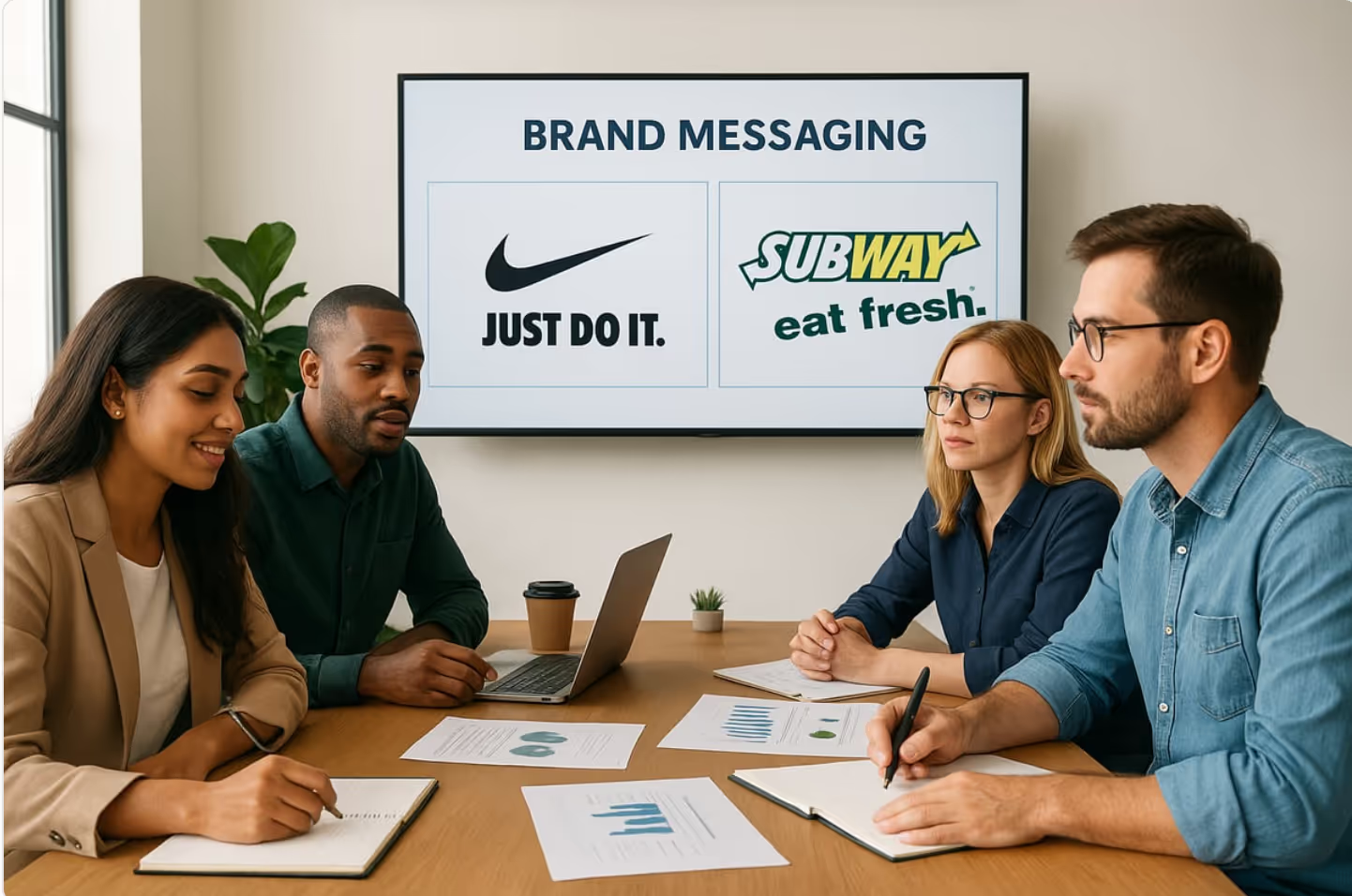
Brand messaging framework success stories are everywhere, and some of the world’s most memorable taglines are proof. Think about Nike’s “Just Do It,” a phrase that instantly recalls motivation and action. Subway’s “Eat Fresh” connects directly with health and freshness, while Airbnb’s “Belong Anywhere” delivers a sense of inclusion and global community. These taglines are more than catchy—they are the product of a robust brand messaging framework that distills the brand’s essence into a few powerful words. Clarity, emotional connection, and repetition make these messages stick in the minds of millions. According to industry research, short and impactful copy is challenging to create but delivers outsized results. For more on crafting effective messaging, explore these Brand Messaging Framework Steps and Best Practices to see how top brands refine their approach.
Memorable Brand Messaging in Action
What makes a brand messaging framework so effective in practice? First, it brings clarity and focus to every brand statement. For example, Nike’s iconic slogan didn’t happen by accident—it was the result of a deliberate process that boiled down the brand’s mission into a single call to action.
- Clarity: The message is instantly understandable.
- Emotion: It sparks a feeling, whether it’s motivation or belonging.
- Memorability: Short phrases make it easy to recall and share.
Brands like Apple, with “Think Different,” and M&M’s, with “Melts in your mouth, not in your hands,” use their brand messaging framework to create lasting impressions. The key is that every word is intentional, reflecting the brand’s personality and promise.
Frameworks for Different Teams and Channels
A brand messaging framework isn’t just for marketing—it empowers every team. Public relations relies on it to craft consistent press releases, ensuring the brand’s core values shine through every announcement. Sales teams use the framework to align their pitches with the brand’s value proposition, building trust from the first conversation.
- HR departments include messaging in onboarding materials to foster a unified culture.
- Content creators use the framework to maintain a consistent voice across blogs, ads, and social media.
- Ad campaigns become more effective when every channel, from digital to print, speaks the same language.
Cross-functional benefits include improved alignment, faster content creation, and a stronger, more cohesive brand presence. When everyone uses the same brand messaging framework, the result is a seamless customer experience across touchpoints.
Lessons from Failures and Pivots
Not every brand gets it right the first time. Several companies have faced setbacks due to weak or inconsistent messaging. For instance, when a brand’s promise doesn’t match customer experience, trust quickly erodes. But a revised brand messaging framework can be a turning point.
Consider Old Spice, which pivoted from an outdated image to a bold, humorous voice. Their new framework unified all communications, leading to viral campaigns and renewed relevance. Similarly, brands that once struggled with mixed messages often find that a strong brand messaging framework brings clarity, helping them regain lost ground and connect with their audience.
Learning from both successes and stumbles, it’s clear that a brand messaging framework is not just a document—it’s the backbone of lasting brand impact.
Future-Proofing Your Brand Messaging for 2026 and Beyond
Adapting your brand messaging framework for the future is essential as markets and customer expectations rapidly evolve. In 2026, flexibility and responsiveness will set successful brands apart. By anticipating change and leveraging the right tools, you can ensure your messaging stays relevant, authentic, and impactful.
Adapting to Changing Markets and Audiences
The pace of change in consumer behavior and market trends demands that your brand messaging framework remains flexible. Customers increasingly value inclusivity, transparency, and digital-first experiences. Brands that fail to adapt risk falling behind.
To stay ahead:
- Regularly review audience insights and update personas.
- Monitor shifts in market sentiment and competitor messaging.
- Test new value propositions and campaign angles.
For a deeper dive into aligning your messaging with market needs, check out Message-Market Fit Strategies. Building adaptability into your brand messaging framework allows you to respond confidently to new opportunities and challenges.
Leveraging Data and Feedback Loops
Continuous improvement is only possible when you measure the effectiveness of your brand messaging framework. Analytics tools let you track engagement, sentiment, and conversion rates across channels.
Best practices include:
- Setting up dashboards to monitor message performance.
- Collecting real-time feedback from customers and internal teams.
- Running A/B tests to compare different messaging approaches.
Brands that listen and adapt quickly are more likely to maintain trust and relevance. Data-driven refinements keep your brand messaging framework sharp and aligned with business goals.
Integrating Technology and AI
Technology, especially AI, is transforming how brands craft and manage their messaging. AI-driven tools can analyze audience preferences, suggest content optimizations, and maintain consistency in tone across platforms.
Key benefits include:
- Automated content review for brand voice adherence.
- Personalization at scale, tailoring messages to individual segments.
- Predictive analytics to anticipate messaging trends.
Generative AI also helps teams produce on-brand copy efficiently, freeing up creative energy for strategic thinking. To see a comprehensive guide on building and refining your brand messaging framework, visit the Brand Messaging Framework Guide.
Building a Culture of Consistent Messaging
A future-ready brand messaging framework is more than a document, it is a shared mindset across your organization. Leadership must champion clear communication values and ensure every employee understands their role as a brand ambassador.
To foster this culture:
- Invest in regular training on your brand messaging framework.
- Encourage feedback and share successes across teams.
- Recognize and reward consistency in brand communication.
As your company grows and diversifies, a strong messaging culture keeps everyone aligned, ensuring your brand story remains cohesive and compelling in 2026 and beyond.
Brand Messaging Framework Templates and Resources
Building a robust brand messaging framework is much easier with the right templates and resources. Whether you are starting from scratch or refining your messaging, having a clear structure helps maintain consistency and clarity across all communications.
Framework Templates and Checklists
A well-structured brand messaging framework template acts as a blueprint for your brand's voice and positioning. Start with a document that covers these critical sections:
- Target audience profiles and personas
- Value proposition and brand promise
- Positioning statement
- Mission, vision, and elevator pitch
- Brand voice, tone, and style guidelines
Checklists ensure you do not miss any essential elements. For inspiration, explore competitor resources like the 7 Powerful Marketing Frameworks article, which showcases different approaches to crafting frameworks. Using a template tailored to your needs will streamline collaboration and speed up the process of building your brand messaging framework.
Tools and Platforms for Framework Management
Managing a brand messaging framework requires more than just a static document. Consider using project management and documentation tools to keep your framework accessible and up to date. Popular options include shared cloud folders, collaborative document platforms, and specialized brand management software.
AI-driven platforms are now available to review content for style and consistency, helping enforce your guidelines across teams. Integrating your brand messaging framework with marketing automation systems also ensures every campaign aligns with your core messaging. For a deeper look into how frameworks fit within the marketing ecosystem, visit Marketing Frameworks Explained.
Additional Learning and Inspiration
To keep your brand messaging framework relevant, continuous learning is key. Explore these resources to stay ahead:
- Books on branding and communication strategy
- Webinars and workshops from industry leaders
- Blogs and podcasts focused on brand messaging trends
Benchmark your framework against top brands and adapt as new trends emerge. Staying engaged with the latest insights ensures your brand messaging framework evolves alongside audience expectations and market shifts.
Now that we’ve explored how a strong brand messaging framework brings clarity, alignment, and momentum to every part of your marketing engine, you might be wondering what the next step looks like for your business. If you’re ready to move from scattered messages to a clear, unified voice that drives real growth in 2026 and beyond, I encourage you to check out the strategies and resources RCKT offers. Their Growth Packages are designed to help founders like you build a repeatable system for sustainable results.
Learn more about RCKT's Growth Packages